
Chiapas / Campeche Offshore
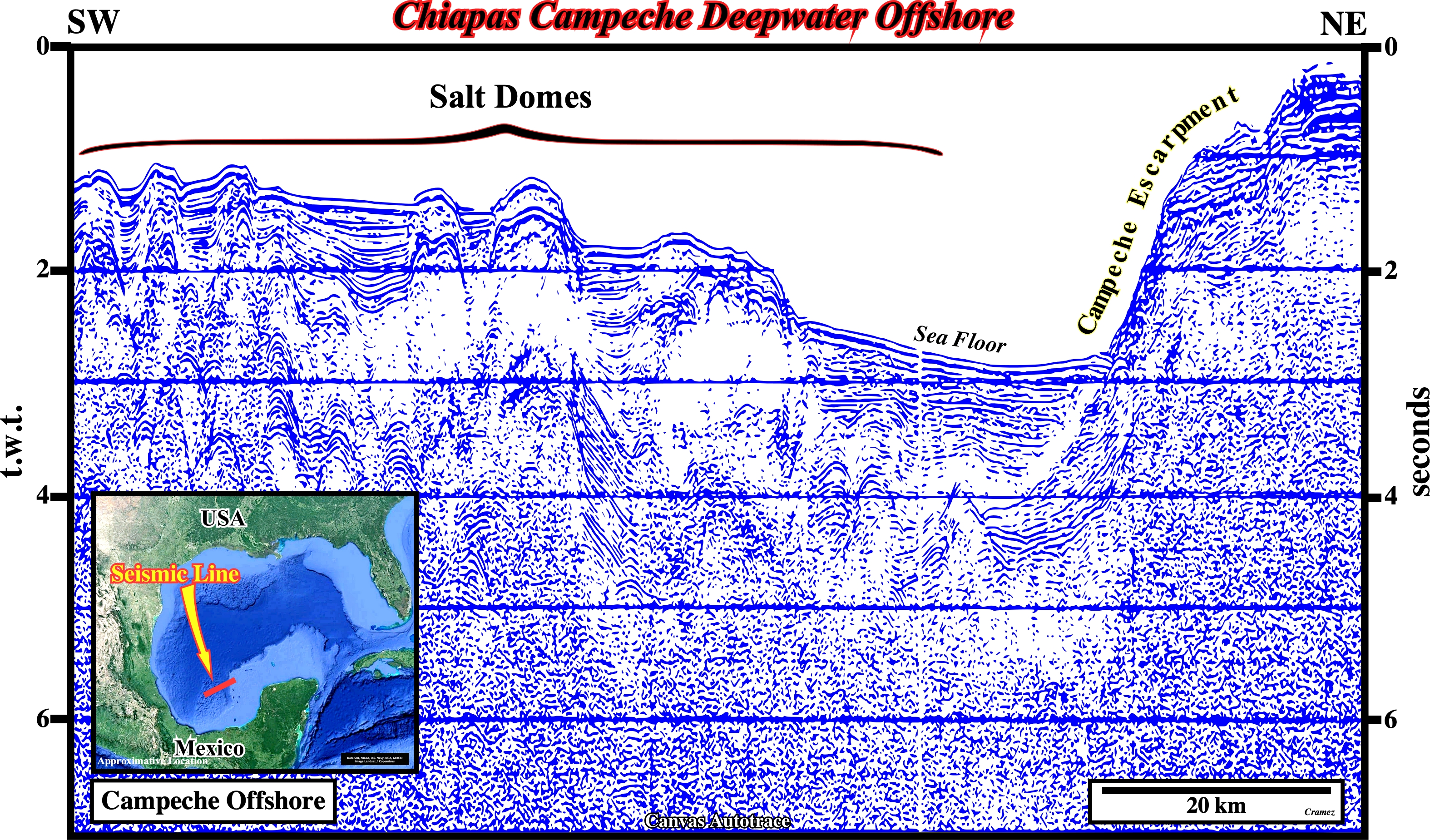
The Campeche escarpment is, clearly, recognized on this autotrace, as well as the salt domes reaching the sea floor. In fact, as illustrated on the next plate, seaward of the Cretaceous carbonate platform, extensional (halokinetic) and compressional salt structures are paramount (see next autotraces).
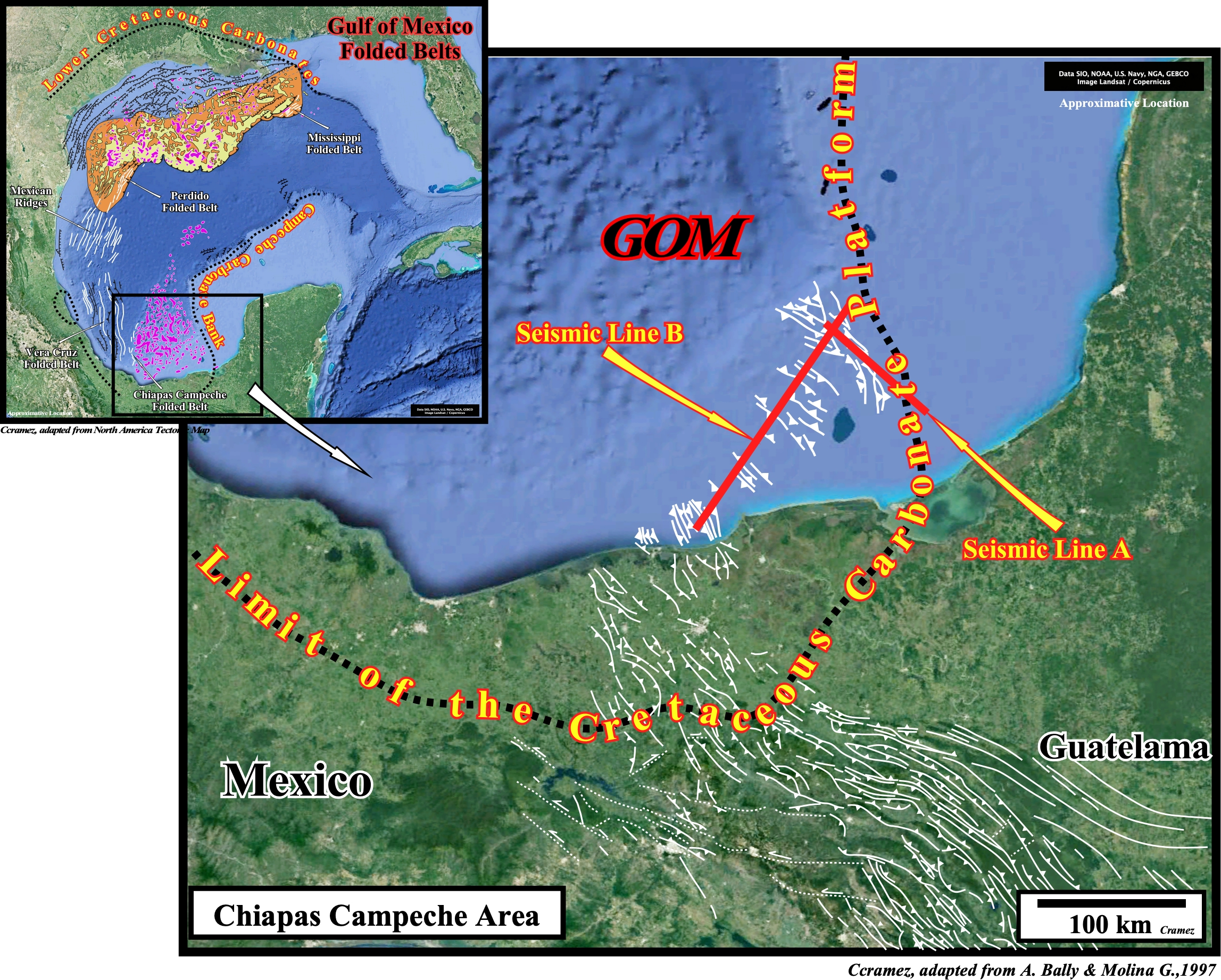
On this tectonic sketch, it is easy to see that the shelf break of the Mesozoic limestone platform intersects the folded belt at high angle. On the other hand, we can see the majority of the folds outcropping in Chiapas affect shallow water limestones. The next two orthogonal autotraces (seismic line A and B) illustrate the complexity of the salt tectonics which is accompanied by a lot of halokinesis In the offshore,(Tabasco field and La Sonda de Campeche) the sediments are either deep water or transitional.
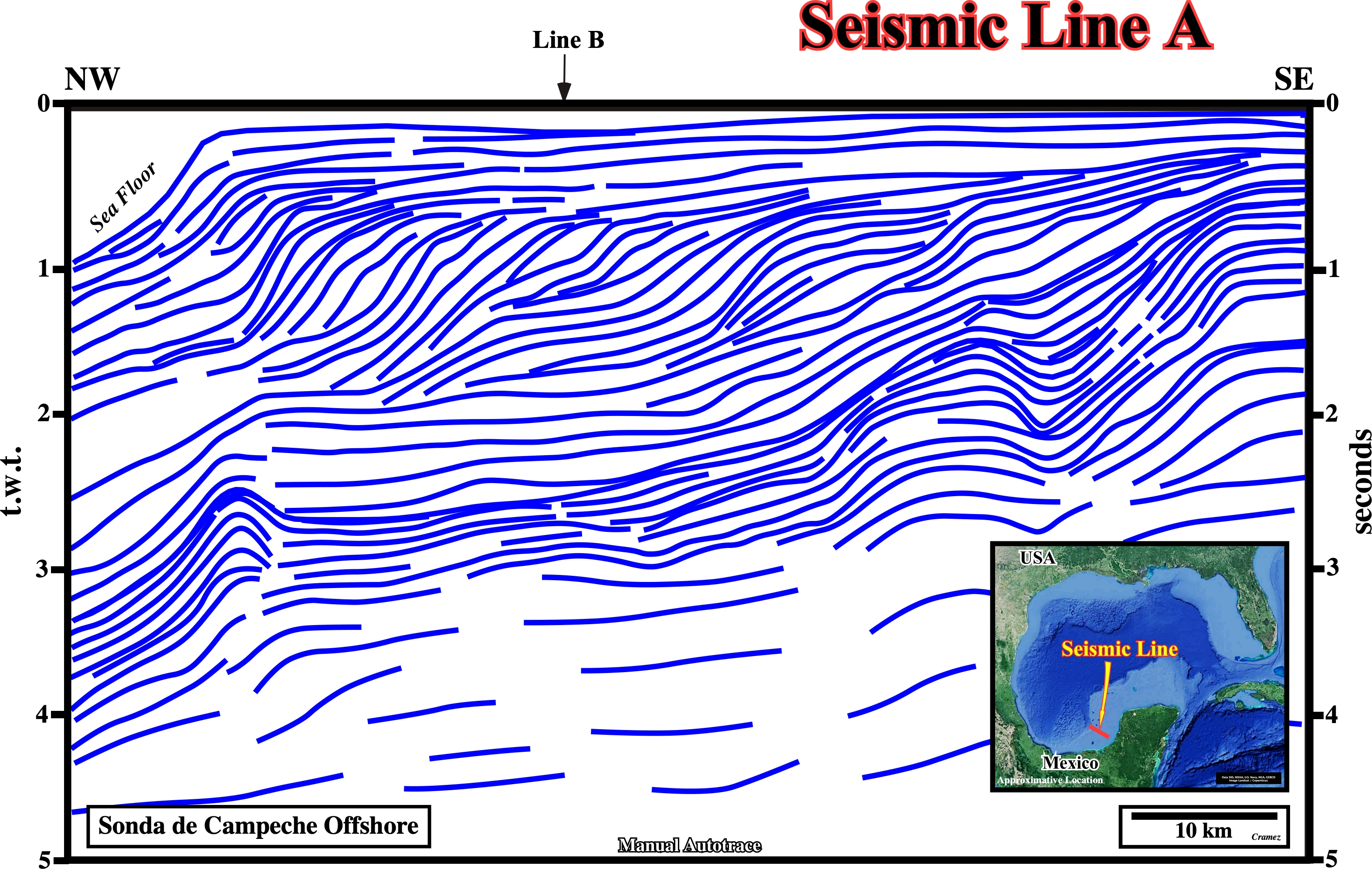
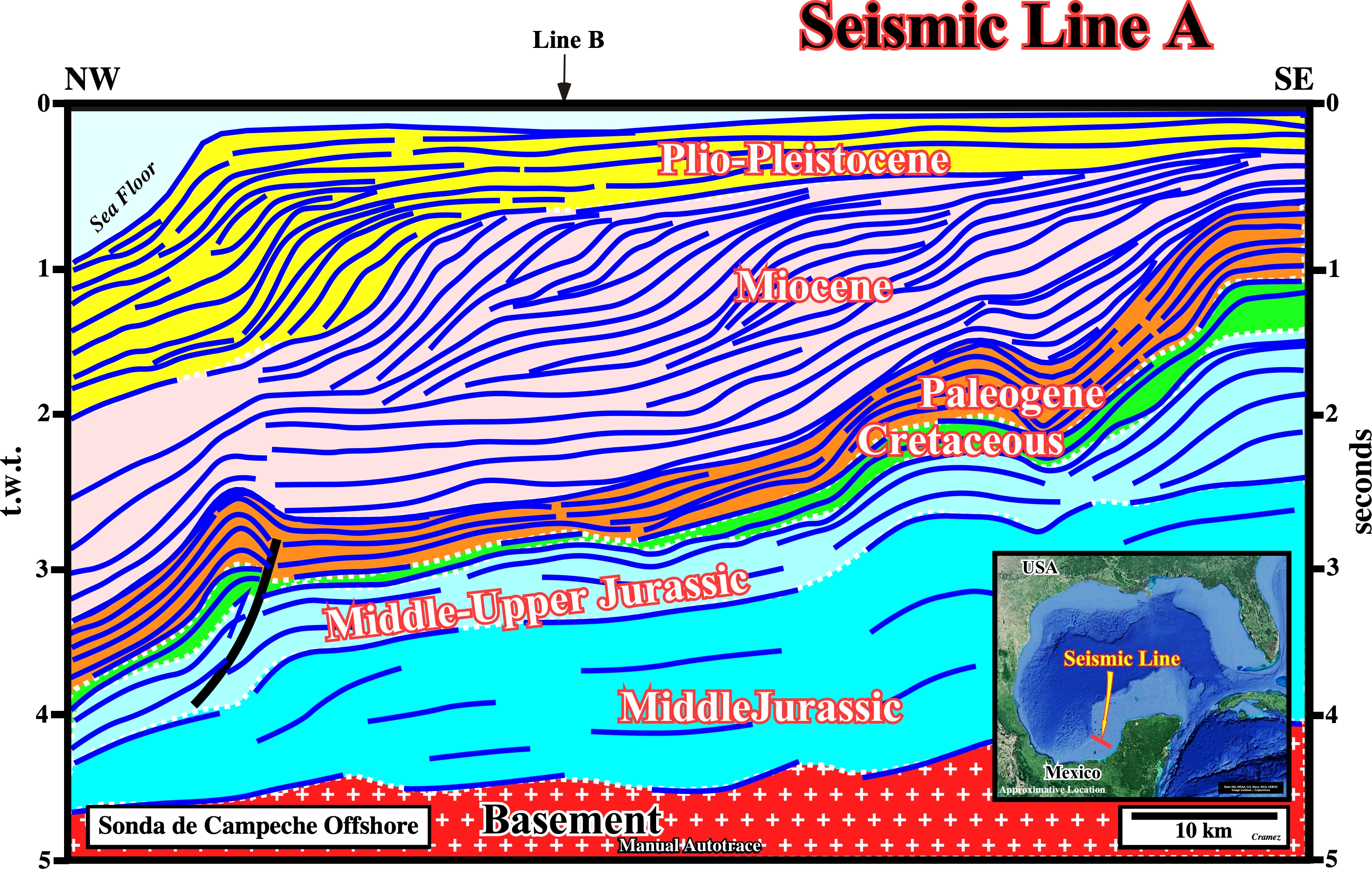
On this tentative geological interpretation of a manual autotrace of a dip seismic line of the western margin of the Sonda de Campeche (Mediterranean-type basin), what is more noticeable seems to be the shortening of the pre-Miocene sediments. However the strike autotrace (seismic line B) shows another picture as illustrated below.
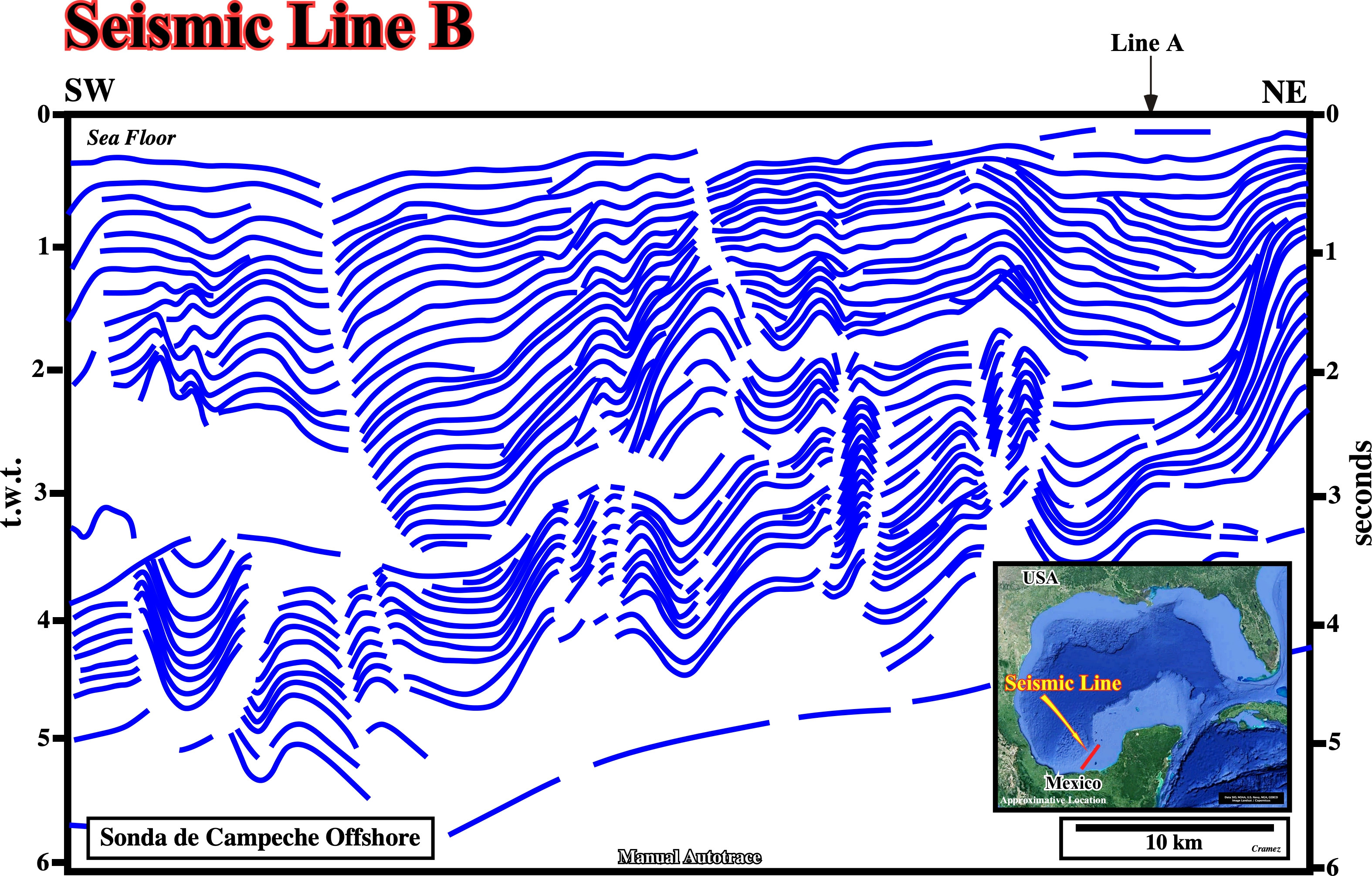
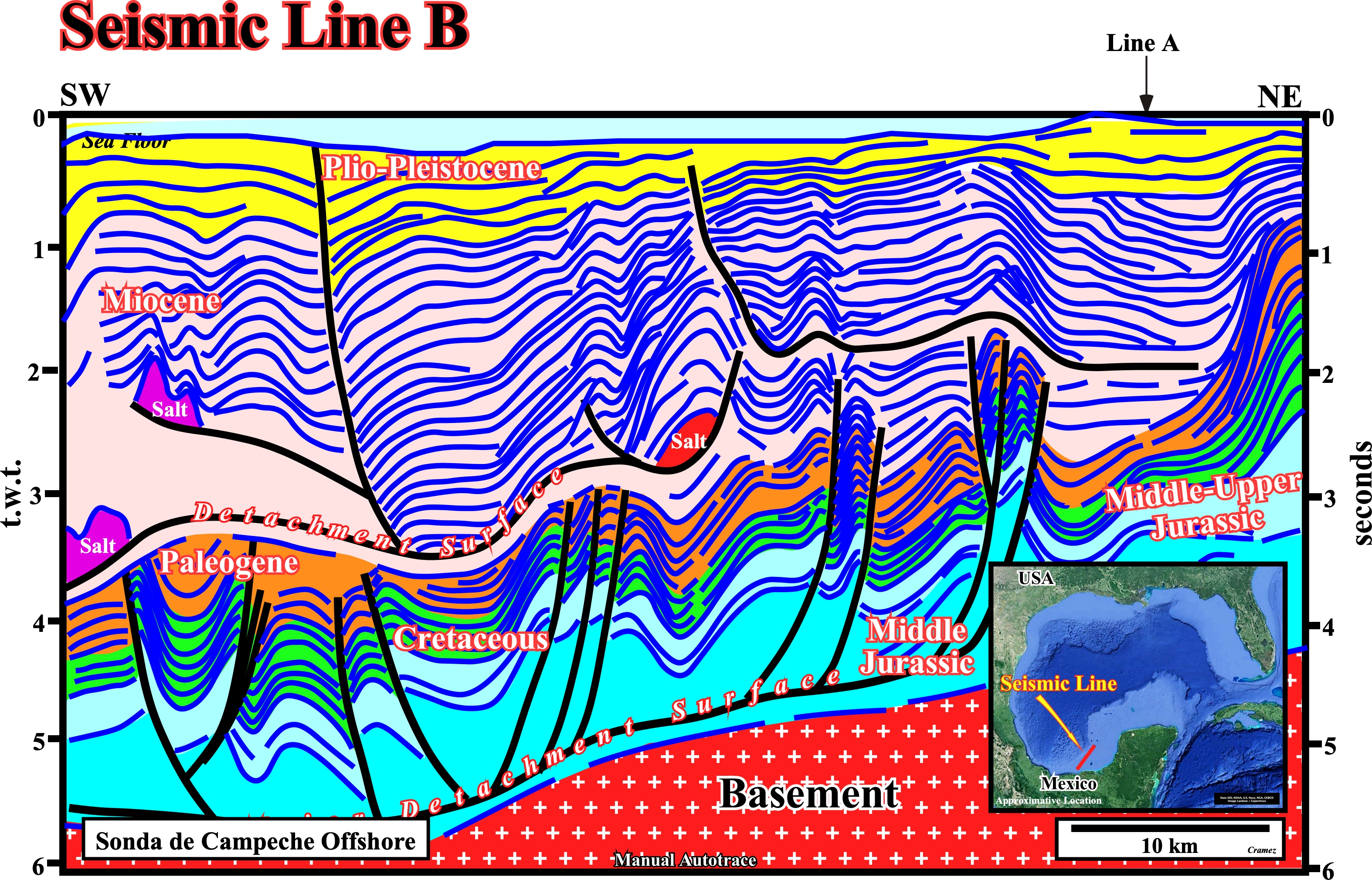
Compression (shortening) and halokinesis (lengthening) strongly deformed the margin sediments of the Mediterranean basin, in which two major detachment (decollement) surfaces are, clearly, perceivable. Take note that the original seismic line is, more or less, perpendicular to the σ2 of the compressional tectonic regime.



Send E-mails to carlos.cramez@bluewin.ch with comments and suggestions to improve this atlas.
Copyright © 2001 CCramez
Last update:
2022