
Pakistan Offshore
Makran Offshore
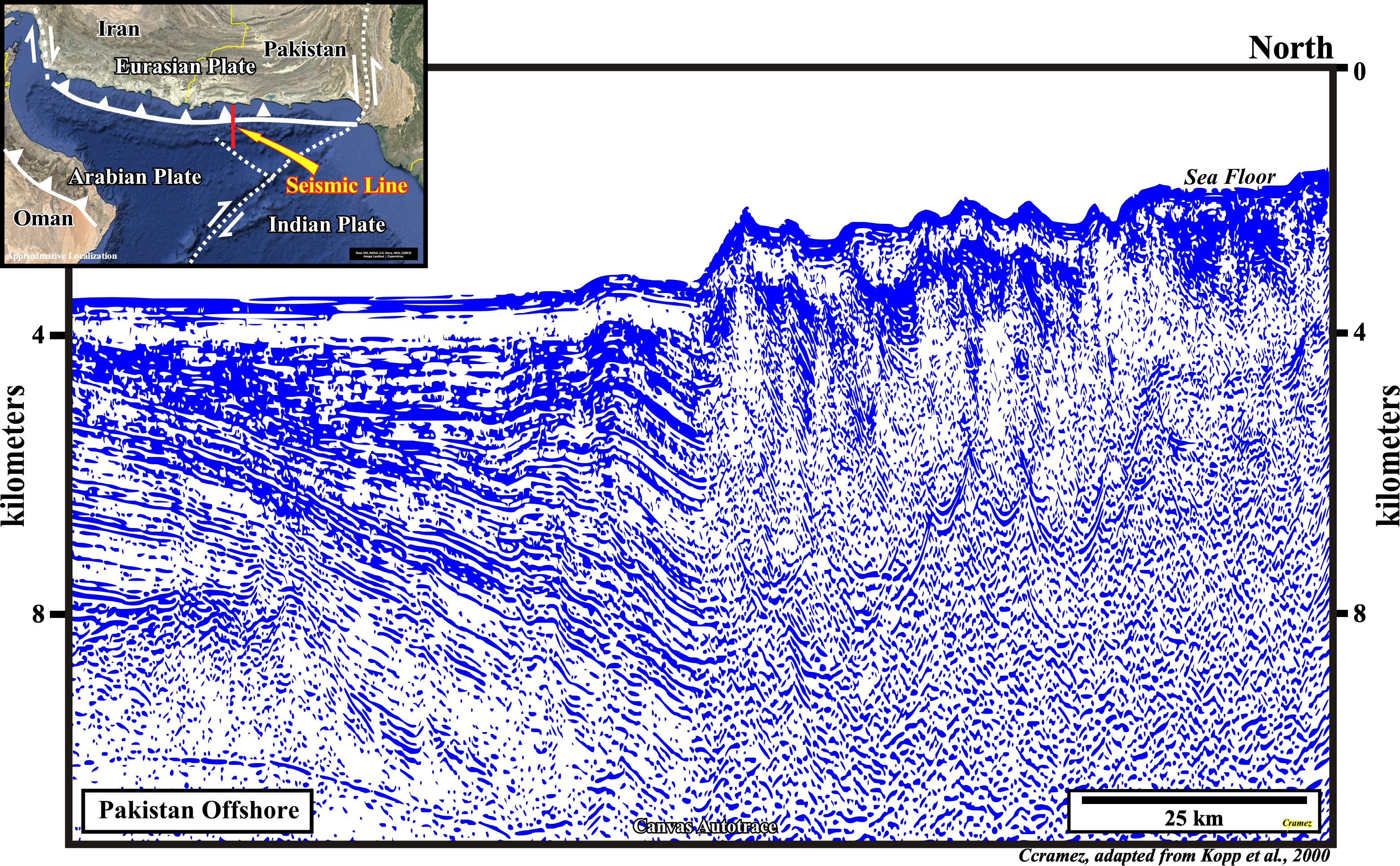
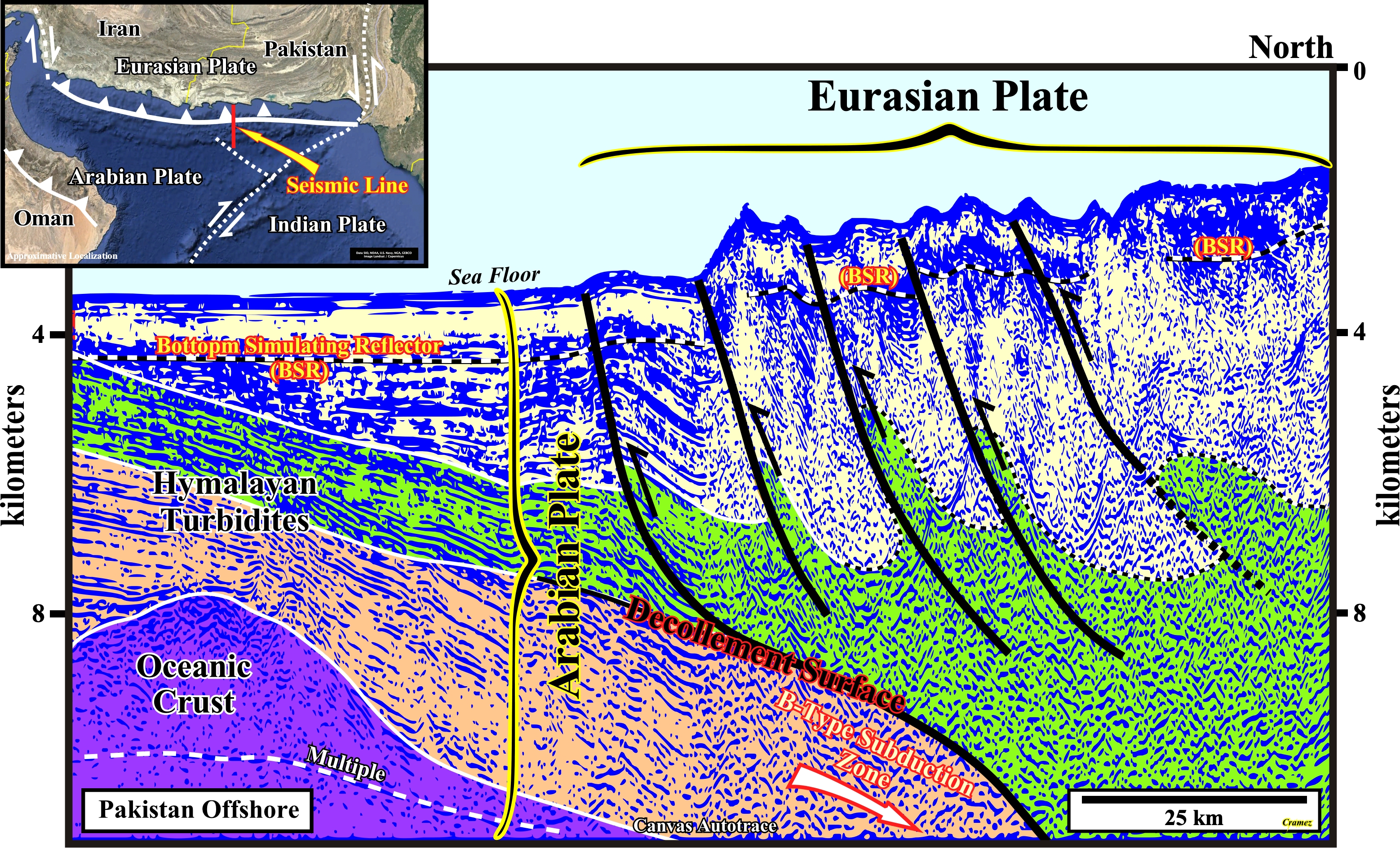
The two lithospheric plates forming the Makran subduction zone (B-type subduction or Benioff zone), i.e., the descending Arabian plate and the overriding Eurasian plate are, easily, recognized on this tentative interpretation of a Pakistan offshore seismic line. The accretionary wedge of the overriding plate is recognized by the characteristic sedimentary shortening by thrusting above a decollement surface. A BSR (bottom simulating reflector), allowing to predict a possible gas hydrate section, can be followed all along of the autotrace. A BSR is a high contrast reflector caused by a significant acoustic impedance contrast between an underlying free gas zone and overlaying gay hydrate, which tends BSR to be roughly parallel to the seafloor topography as illustrated on this tentative interpretation. A forearc basin associated with the accretionary wedge seems to be masked, partially, by the presence of the BRS and by sea floor multiple, which is not the case on the next autotrace.
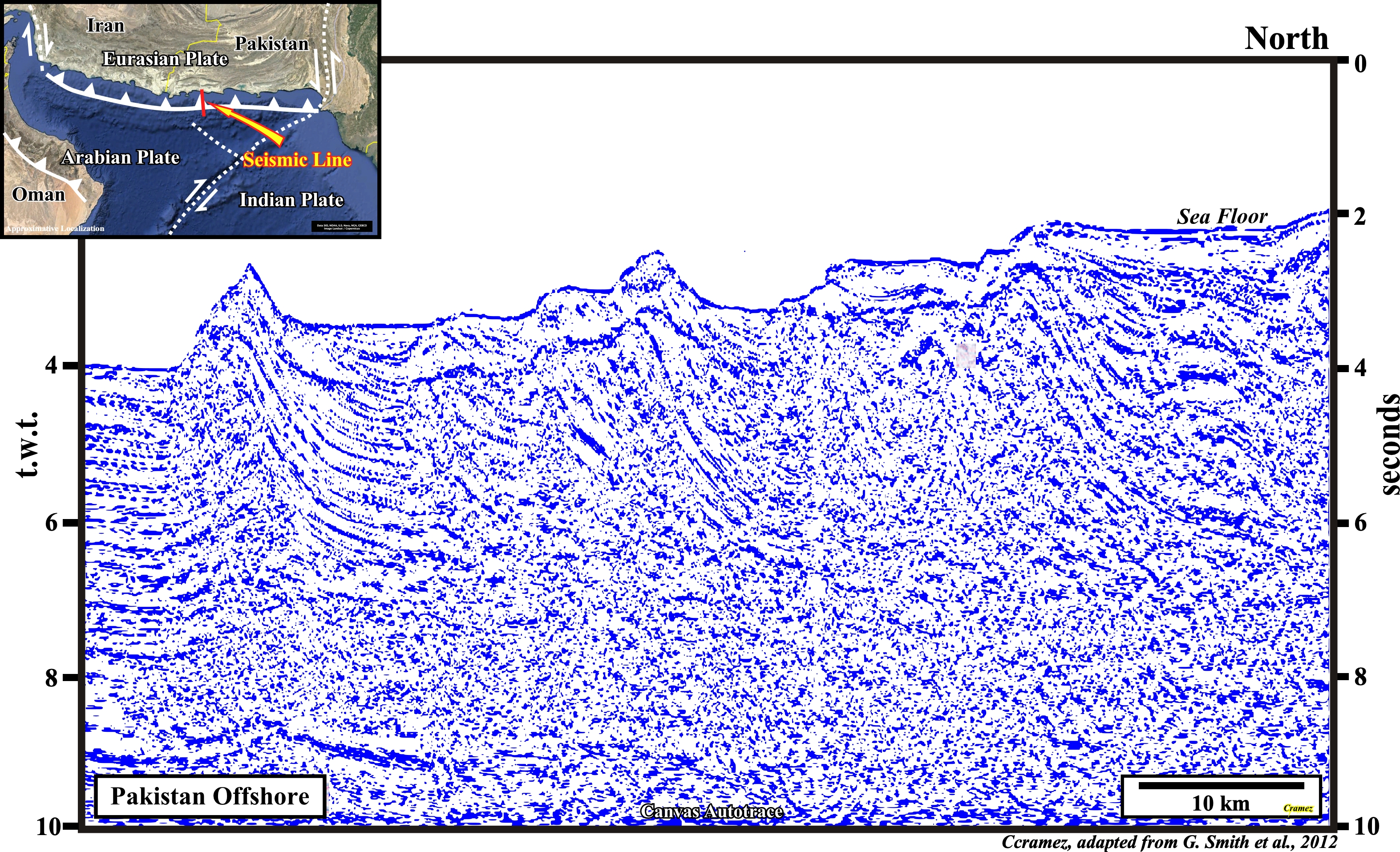
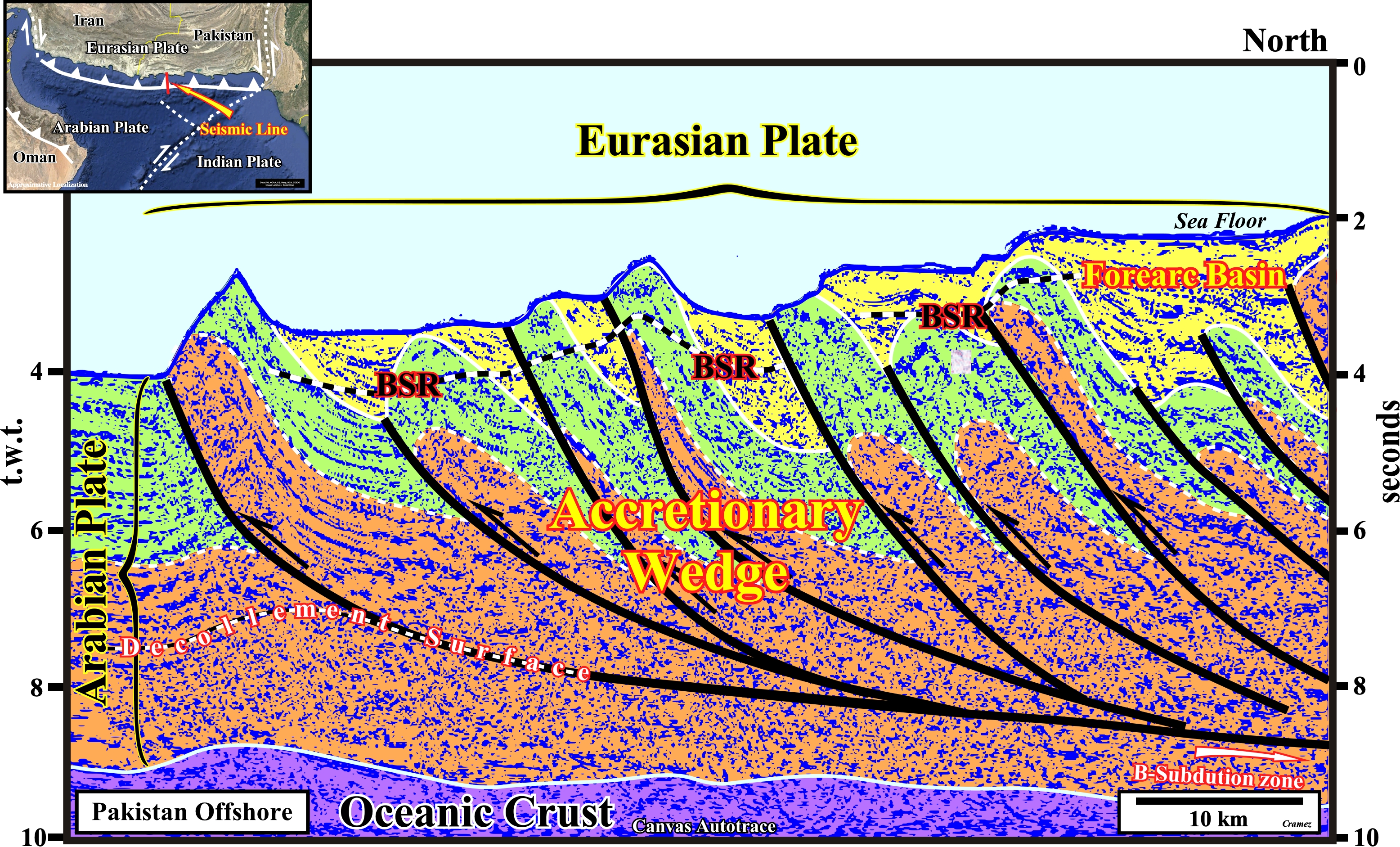
In spite of the presence of a BSR near the top of the upper lithospheric plate (Eurasian plate) above the plunging slab of oceanic lithosphere (Arabian plate), forearc basins, kinematically linked to the accretionary wedge of the Eurasian plate, are visible on this tentative interpretation. Obviously, the accretionary wedge (often called accretionary prism) is tapered at the subduction zone. Its upper boundary is the sea floor and the lower is the basal decollement surface along which shear take place when the wedge reaches a critical angle. Remind that a bottom simulating reflector (BSR) occurs a the base of the hydrate stability zone and that gas hydrates are crystalline structures of water molecules surrounding hydrate-forming gas (mostly methane), which are stable in deep-sea sediments at moderate temperatures and higher pressures (oceanic hydrates). The importance of methane hydrates is, mainly, due to the large amount of methane assumed to be stored, which certain geoscientists (Kvenvolden, 1988) estimated to contain about twice as much carbon as all fossil fuels.
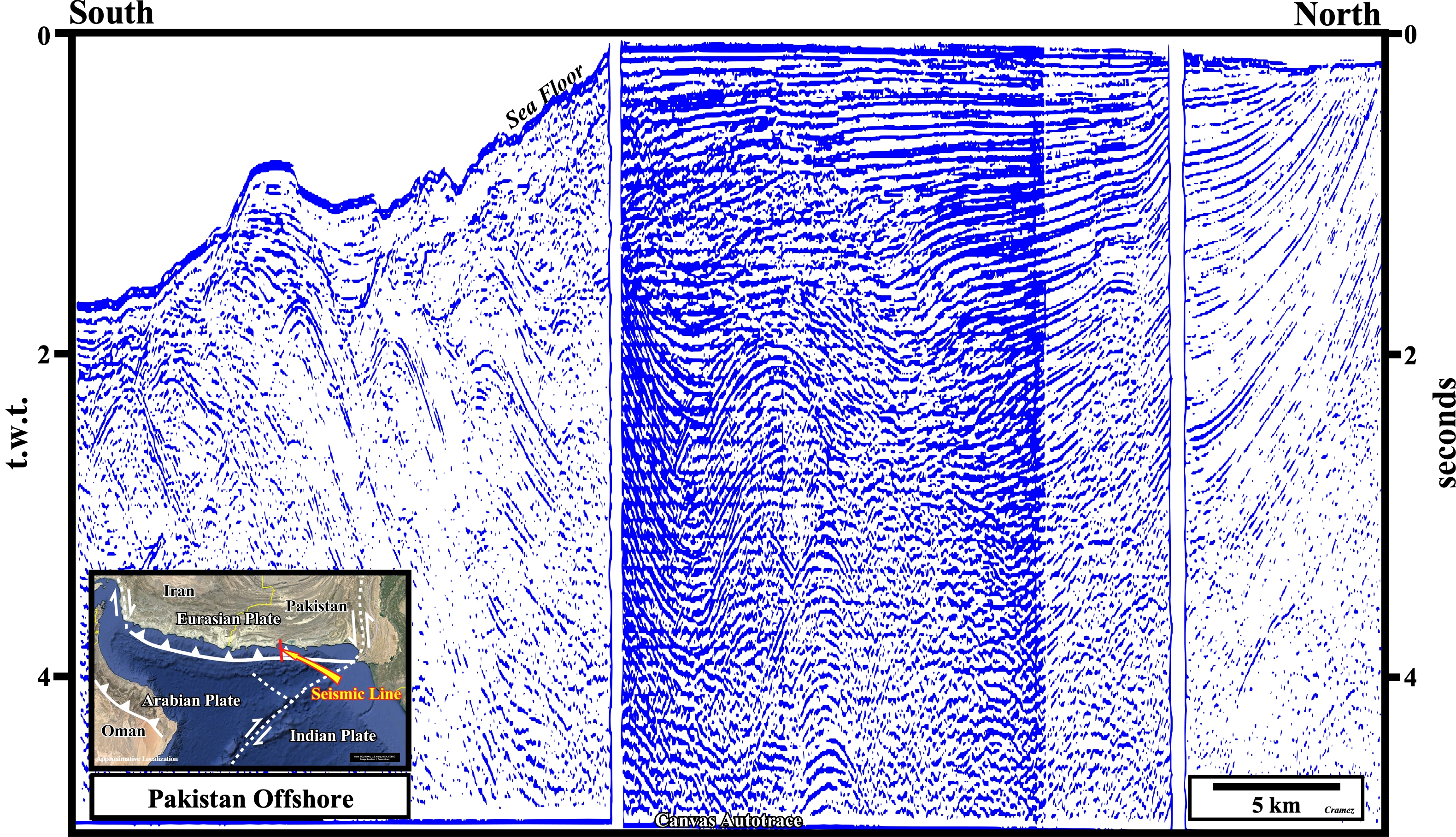
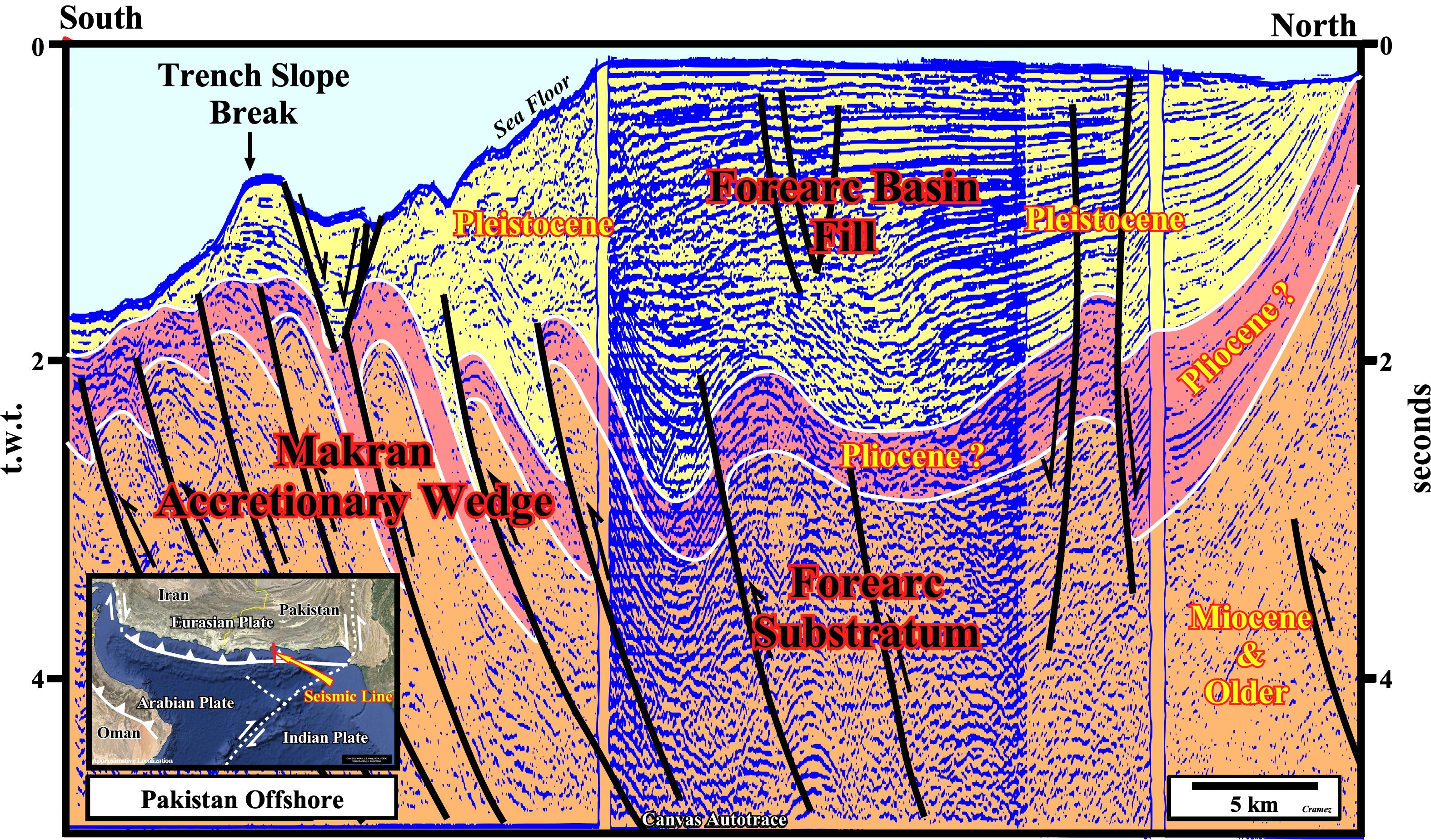
On this tentative interpretation of a Canvas autotrace of a composite seismic line of Pakistan offshore recognizing the upper continental slope and the conventional offshore, i.e., on the southern part of the Eurasian plate (overriding plate of the Makran subduction zone), the Makran accretionary prism or accretionary wedge, as well as, the forearc basin, are recognized, readily . The forearc basin is developed in the arc-trench gap, which is limited between the volcanic arc and the trench slope break (well visible on the left part of this autotrace) and filled with sediments derived from the volcanic arc or with remain of oceanic crust. The arc-trench gap depends on the angle of subduction. It can be quite narrow in steep subduction zones have relatively narrow arc-trench gaps.
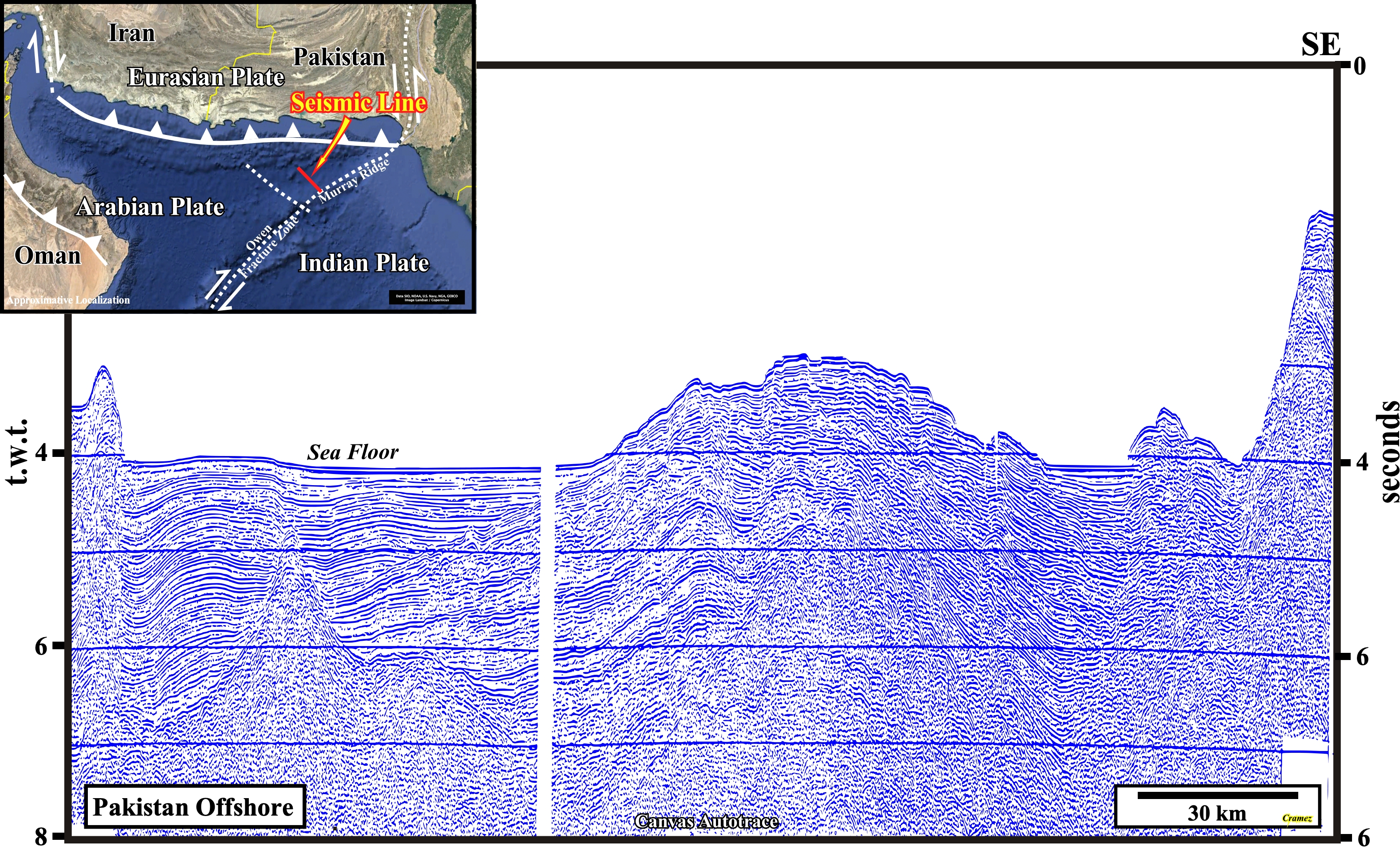
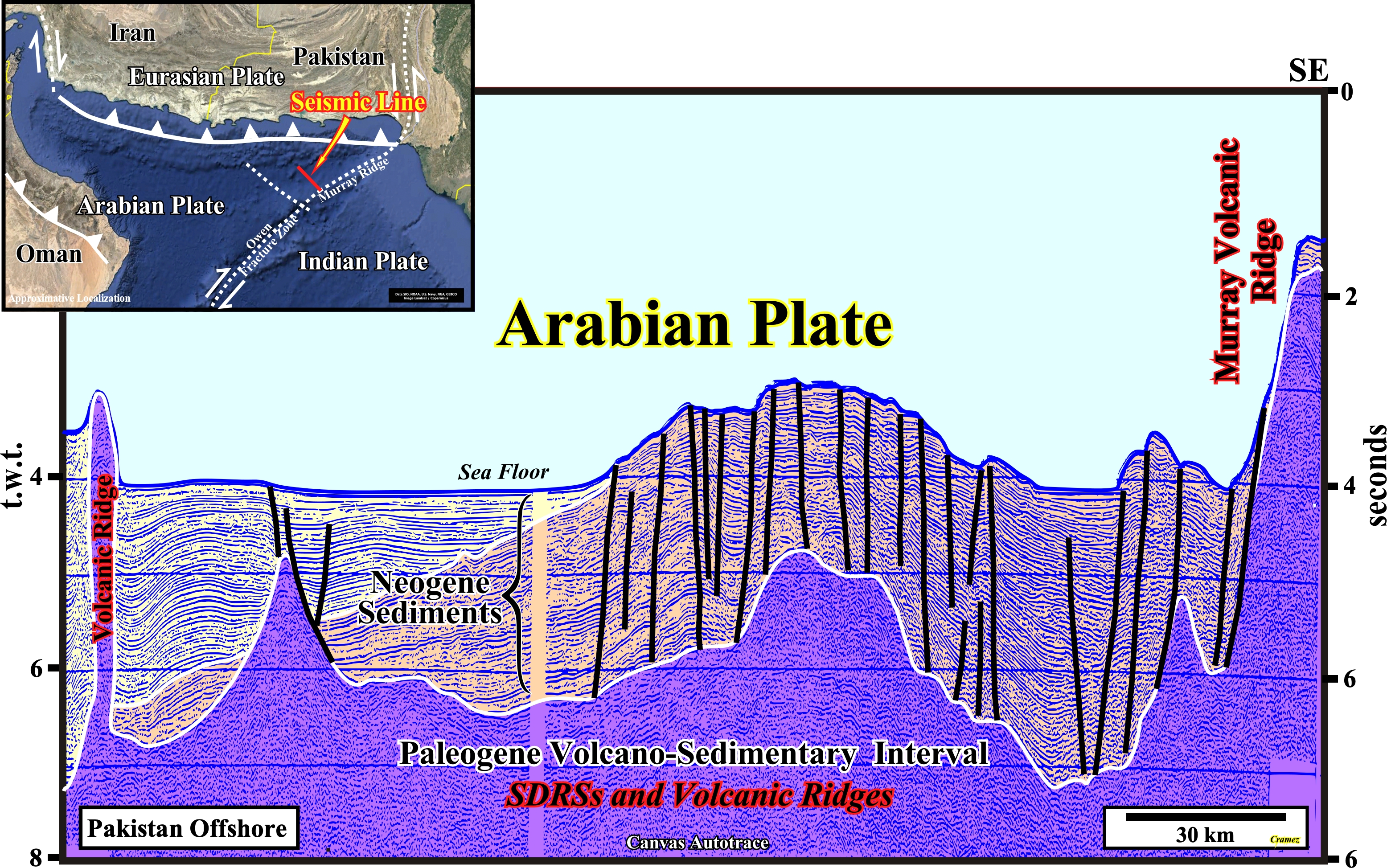
This autotrace illustrates the Neogene sediments of Arabian plate NW of the Murray ridge system, which seems to correspond to an active transform margin of the Indian plate since the Upper Cretaceous. In fact, along this transform fault (fault in which two tectonic plates slide past one another) negative and positive structures are formed in association with transpression and transtension tectonic regimes, as, for instance, the NE-SW trending Dalrymple trough where more than 8 km of clastic sediments have been accumulated in the Neogene. The rifted (lengthened) Gondwana continental crust, in which rift-type basins are developed, is covered by Paleocene volcano-sedimentary section correlated with seaward dipping reflectors (SDRs) recognized along the northern Murray Ridge, where the west oceanic crust of the Arabian Plate is subducted below the continental Eurasian Plate (Gaedicke, C. et al., 2002).



Send E-mails to carlos.cramez@bluewin.ch with comments and suggestions to improve this atlas.
Copyright © 2001 CCramez
Last update:
2022