
Oman Offshore
Oman / Makran Offshore
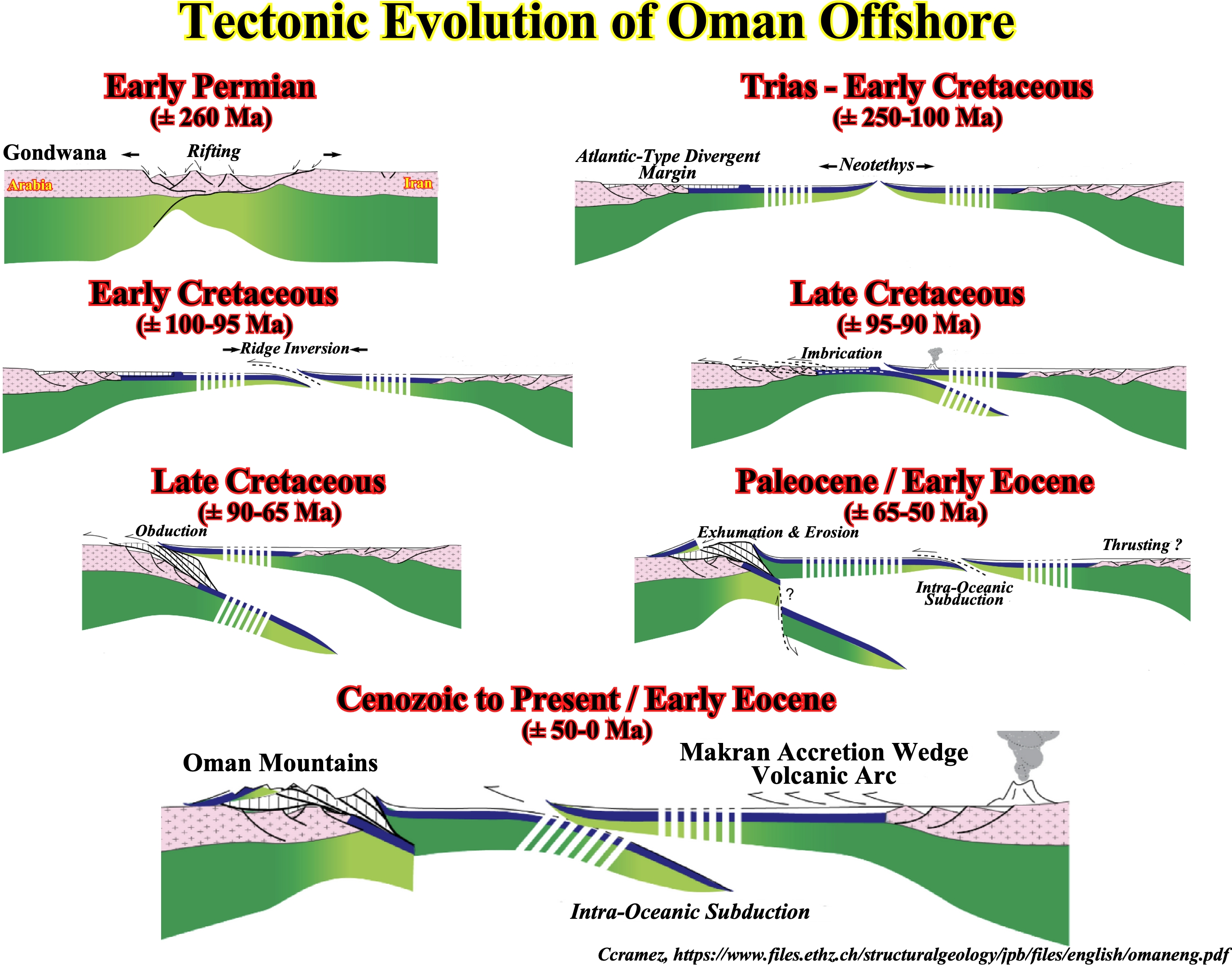
Using the tectonic evolution of the Oman offshore proposed by Jean-Pierre Burg (2018), in Script to Tectonics (ETH Zurich Research Collection), tentative geological interpretations of the Oman offshore seismic lines can be, correctly, approach using the K. Popper methodology (Theory precedes Observation). The tectonic evolution can be summarized as follows: "The rifting of the Gondwana small supercontinent, between Oman and Iran took place, roughly in Early Permian (± 260 Ma). The breakup of the Gondwana lengthened lithosphere (rift-type basins included) and the subsequent oceanic expansion (seafloor spreading) create Triassic/Early Cretaceous Atlantic-type margins with a large carbonate platform on the southern Tethys margin (Oman side). An intra-oceanic subduction initiated around 95 Ma, probably, near a dead oceanic ridge. In the late Cretaceous, the north dipping and intra-oceanic subduction zone located to the north of the Arabian continent consumed the Tethys oceanic lithosphere. The sedimentary cover of Tethys built up an accretion wedge until the Late Campanian. As the Arabian plate moved progressively northwards, it entered into the subduction zone below a slice of the Tethys oceanic lithosphere. The subduction of the Arabian continental margin under the overriding oceanic plate (obduction) began at near 90 Ma The entire obduction and emplacement of the Sumail Ophiolites lasted about 27 million years from 95 to 68 Ma, during the Late-Cretaceous, while the average rate of ophiolite displacement was ca. 2cm/yr. During this time interval, the allochthonous nappes were assembled from the intense imbrication of oceanic and slope sediments originally developed on the Oman continental margin with Tethys ocean floor. High-Pressure rocks were brought to the surface just after obduction (80-70 Ma). Continuing convergence created another subduction trench (proto Makran). The resulting crustal relaxation on the earlier subduction site permitted uplift of the half-buried Oman continental margin. The gravity-driven extension around basement structural culminations subsequently disrupted the ophiolitic thrust sheet further onto the Arabian shelf. The mechanisms of rapid exhumation during plate convergence are a subject of discussion. The question is how normal faulting and associated rapid exhumation of high-pressure rocks combine with coeval thrusting and plate convergence. By Maastrichtian time (70-65 Ma) all nappes had been partially eroded and transgressed by shallow- water carbonate rocks. The Makran accretion wedge of Maastrichtian to Eocene age underlies an ophiolite hanging-wall due to post-Early Eocene and still active convergence between Eurasia and Arabia. Late folds began their main development in the Pliocene (like in Zagros). Continent/continent collision has not occurred between Oman/Makran".
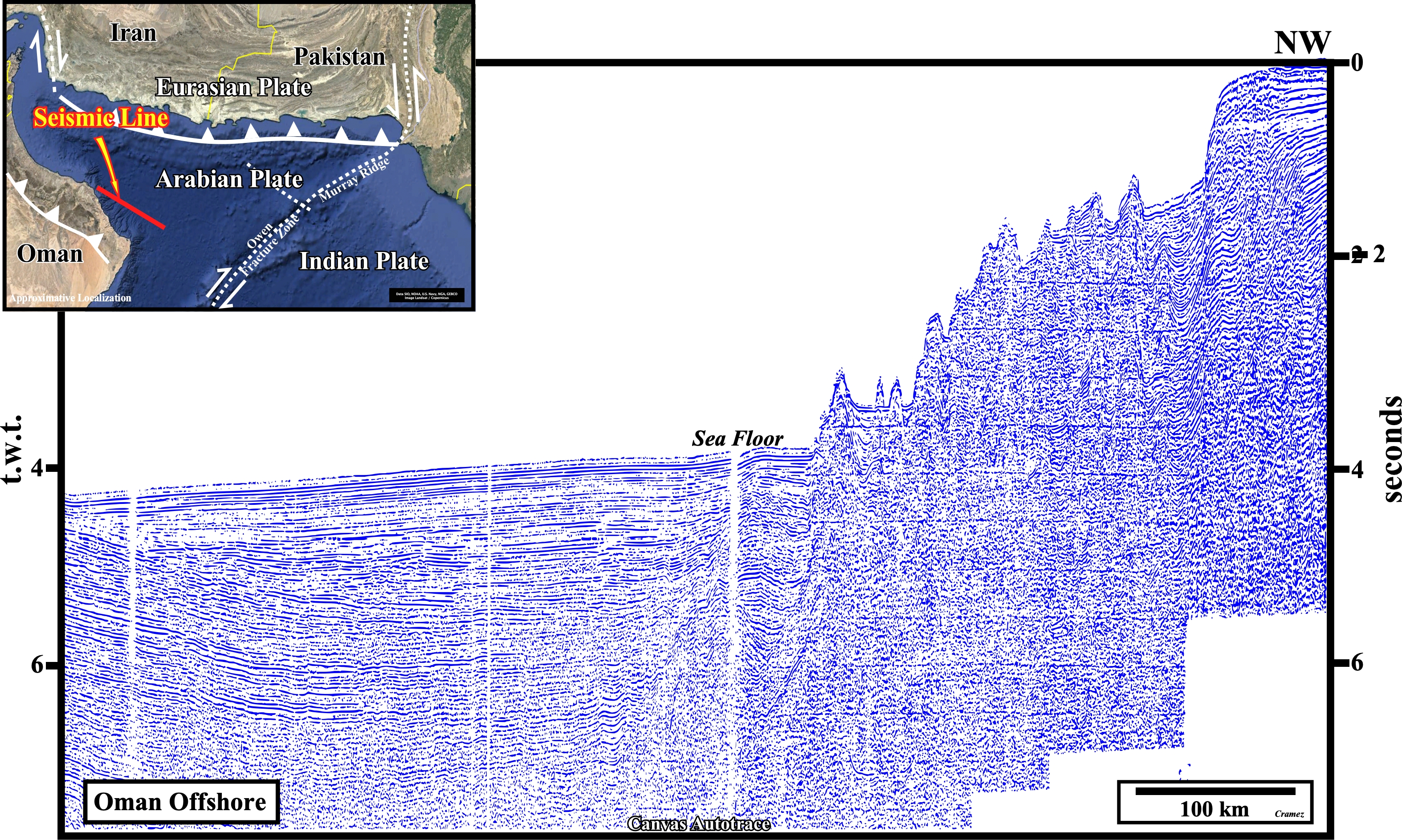
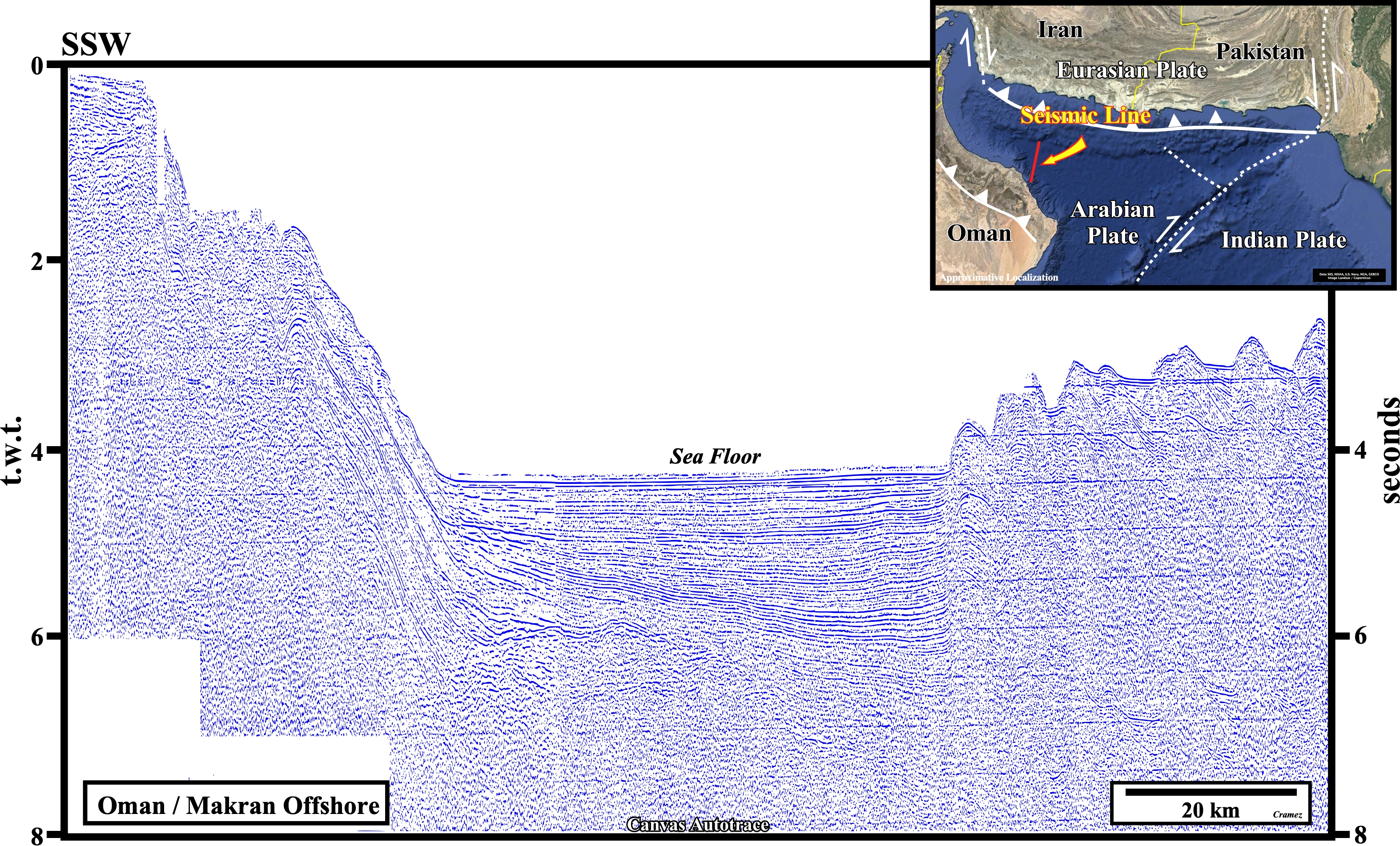
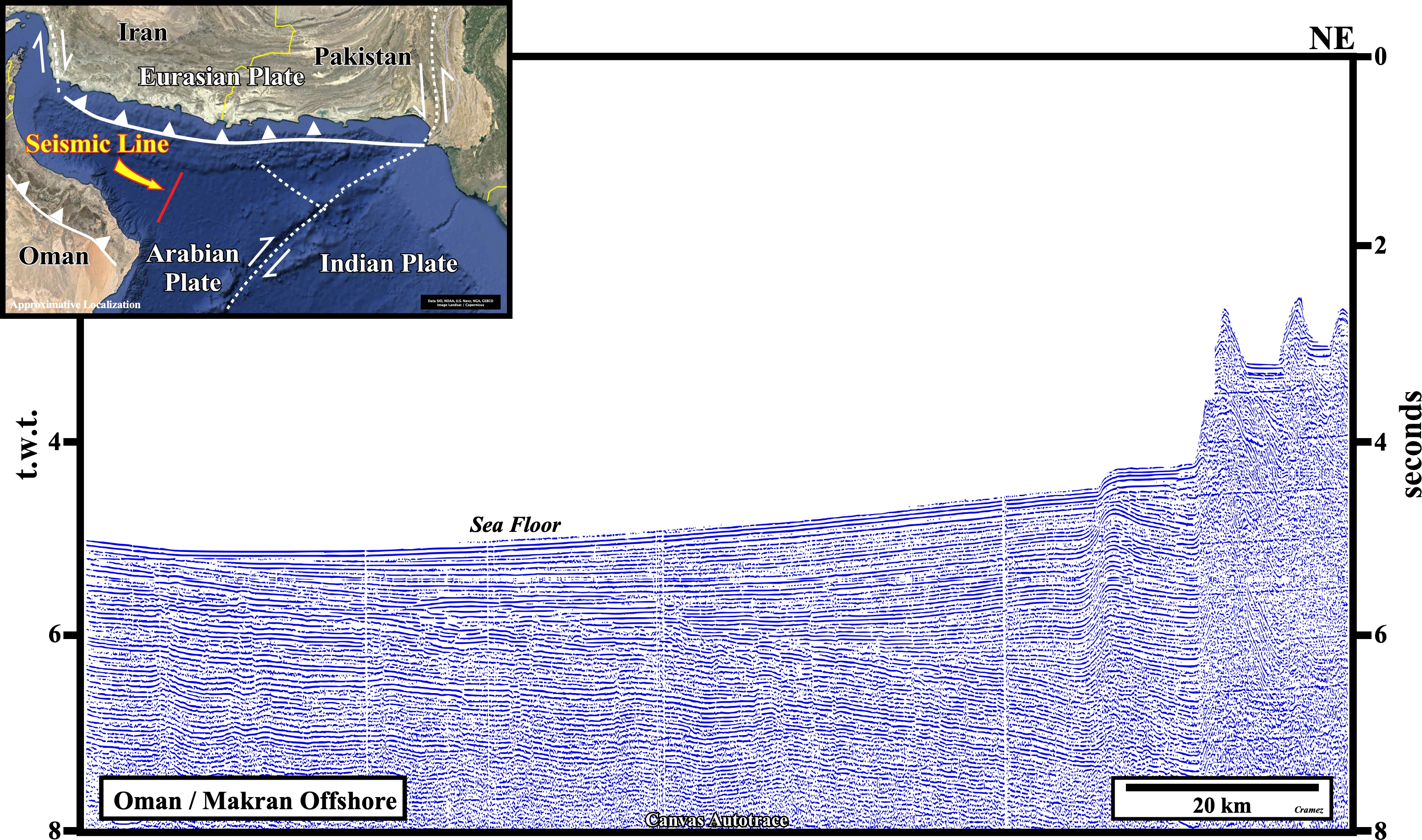
On these Canvas autotraces of of seismic lines of the Oman /Makran offshore (Arabian Plate), a simple look at the bathymetry, corroborates the geological setting of the area, depicted on the tectonic sketch of the location maps. In other words, the Oman / Makran offshore is bounded between two fold belts, with the same vergence, which frontal thrust zones are located in Oman onshore and Iran/ Pakistan offshore (southern Eurasian plate boundary). The foredeep basin associated with the northern fold belt of the Eurasian plate is quite well recognized over the plunging Arabian plate sediments.


Send E-mails to carlos.cramez@bluewin.ch with comments and suggestions to improve this atlas.
Copyright © 2001 CCramez
Last update:
2022
