
South Australia Offshore
Otway Geographic Basin
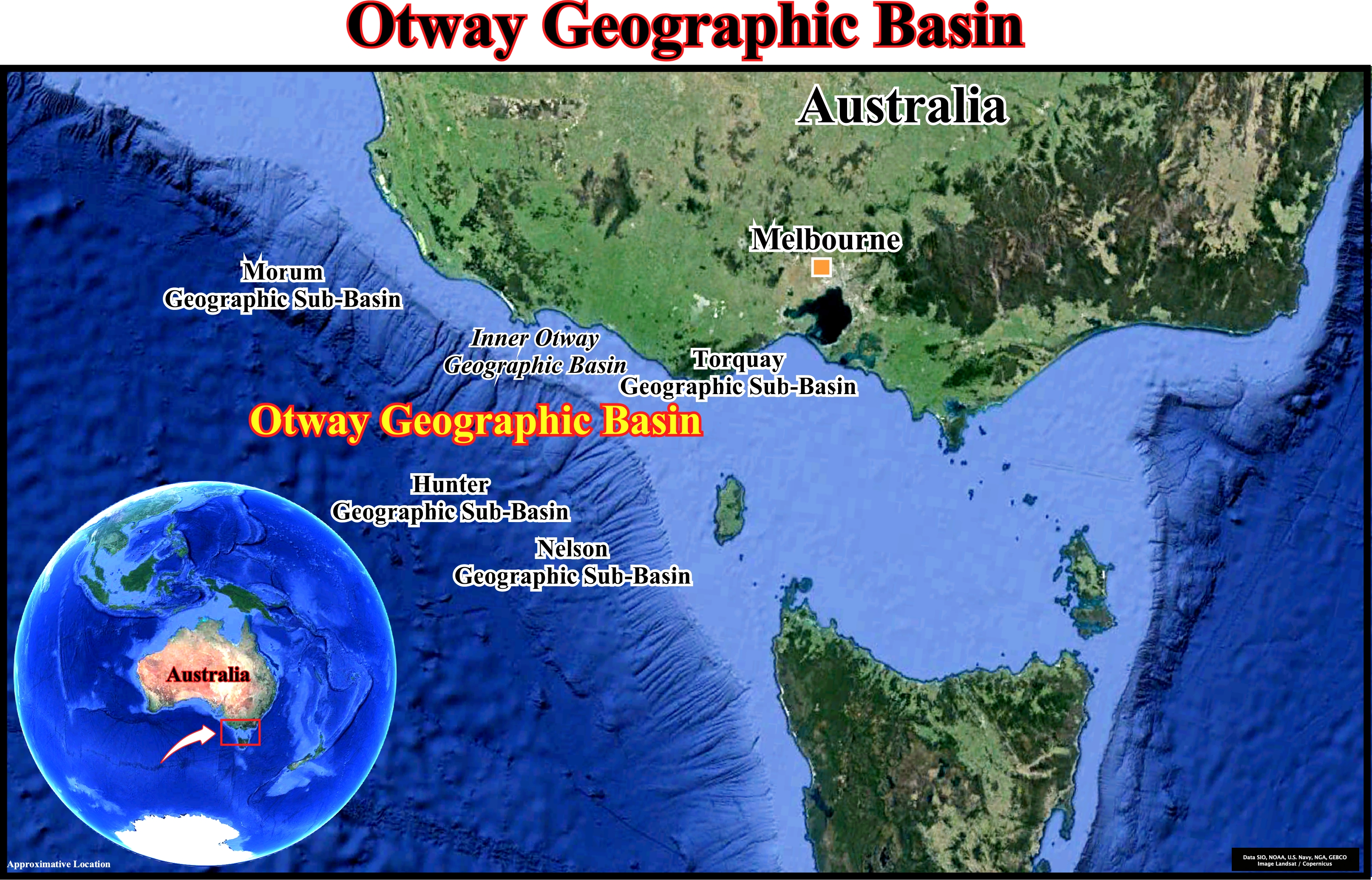
The Otway geographic basin is, mainly, a NW-SE striking complex rift-type basin, formed before the breakup of the Pangea lithosphere and covered by a thin Atlantic-type divergent margin (post-Maastrichtian). As illustrated, it extends for approximately 500 km along the onshore and offshore parts of southeastern Australia. Three geographic sub-basins can be considered in it: (i) Morum , (ii) Hunter and (iii) Nelson. In fact, with the onset of the major rifting phase, in the Late Jurassic, several east-northeast-trending extensional depocenter (geographic sub-basins) were generated. The influence of the main extensional faults controlling the Late Jurassic to Early Cretaceous rifting waned in the early Aptian. Rifting ceased in the Late Albian as the basin was subjected to significant compression giving rise to the basin-wide, tectonically enhanced unconformity (angular unconformity). A renewed phase of extension and rift-related subsidence began in the Turonian. Rifting continued to control basin development through much of the Late Cretaceous until the latest Maastrichtian when final continental breakup took place. The peneplain represented by the breakup unconformity (Late Maastrichtian) was flooded during the first major ingression (relative sea level rise) of the incipient Southern Ocean towards the end of the Maastrichtian.
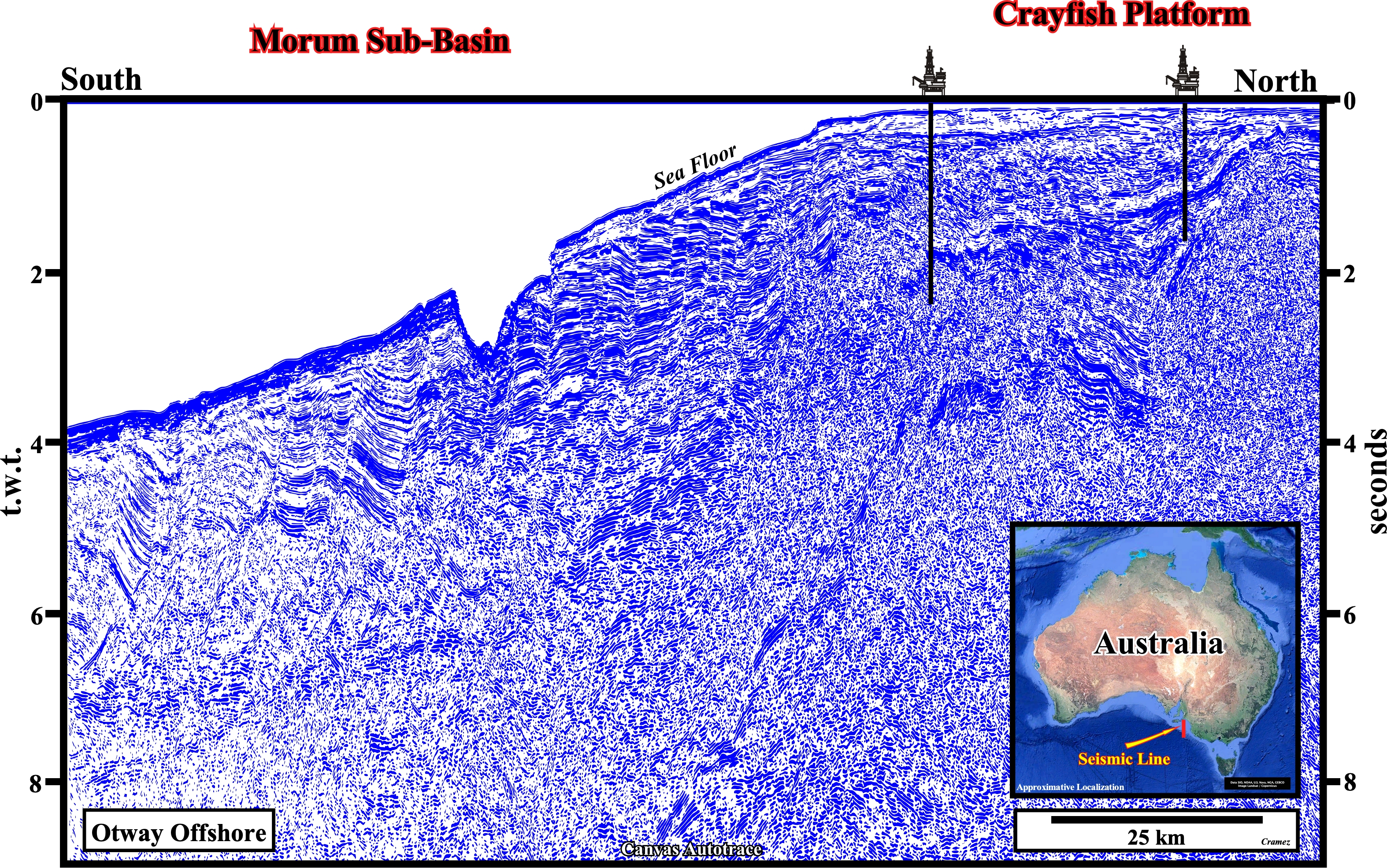
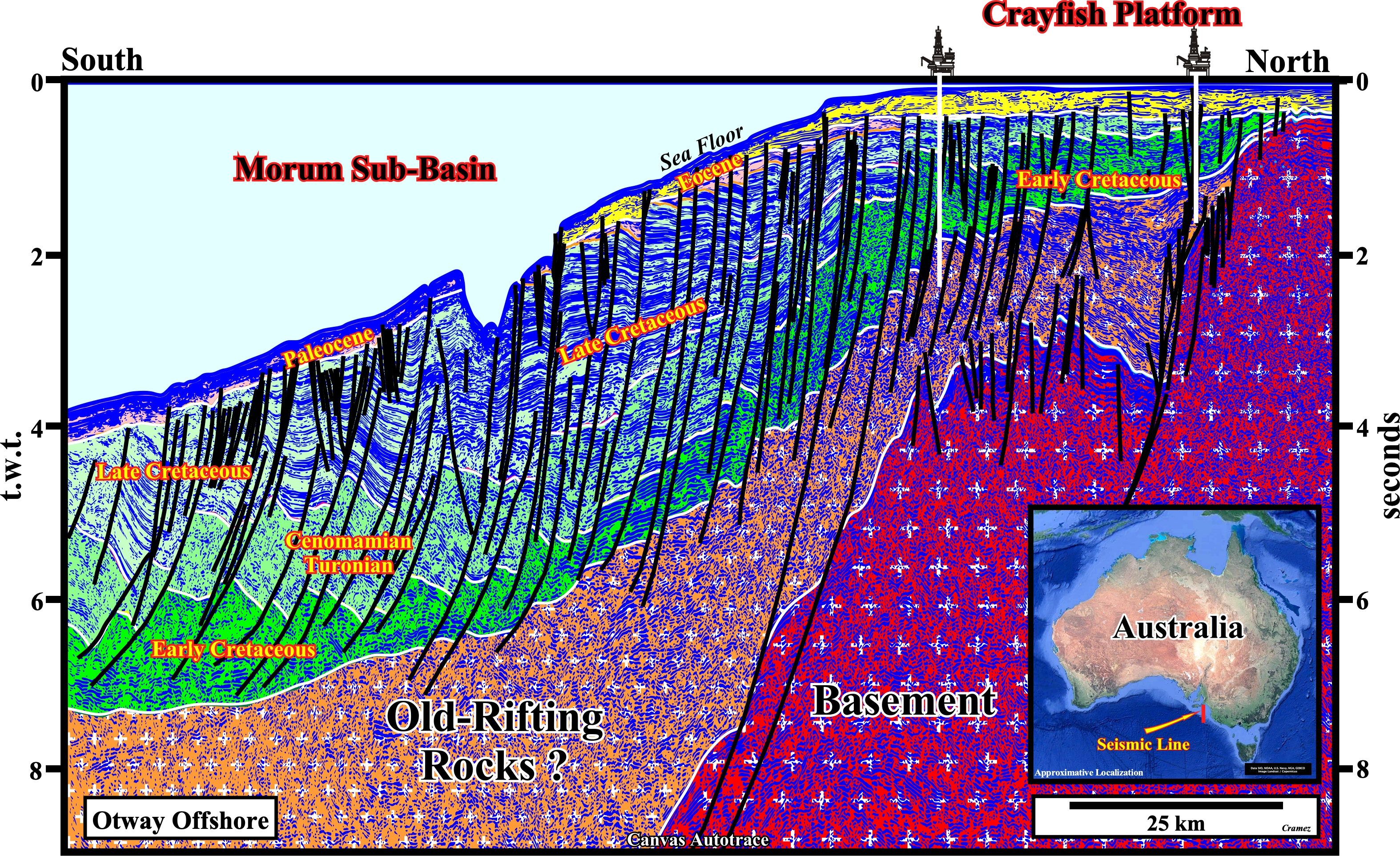
As indicated on this tentative geological interpretation, we conjecture that the sedimentary package between the basement and the Early Cretaceous sediments is a complex old rift-type basin, probably, Jurassic. The break-up of the lengthened Pangea continental crust, i.e., of the basement and rift-type basins occurred, probably, during Late Maastrichtian. However well-developed sea floor spreading did not commenced until the Mid-Eocene, when the rapid north–south oriented movement between Australia and Antarctica began. Largely northwest–southeast extension during the Late Jurassic and Early Cretaceous resulted in the formation of a series of west-northwest-trending continental rift basins along the southern margin of Australia, and a series of north-northwest trending transtensional depocenters along the western margin of Tasmania.
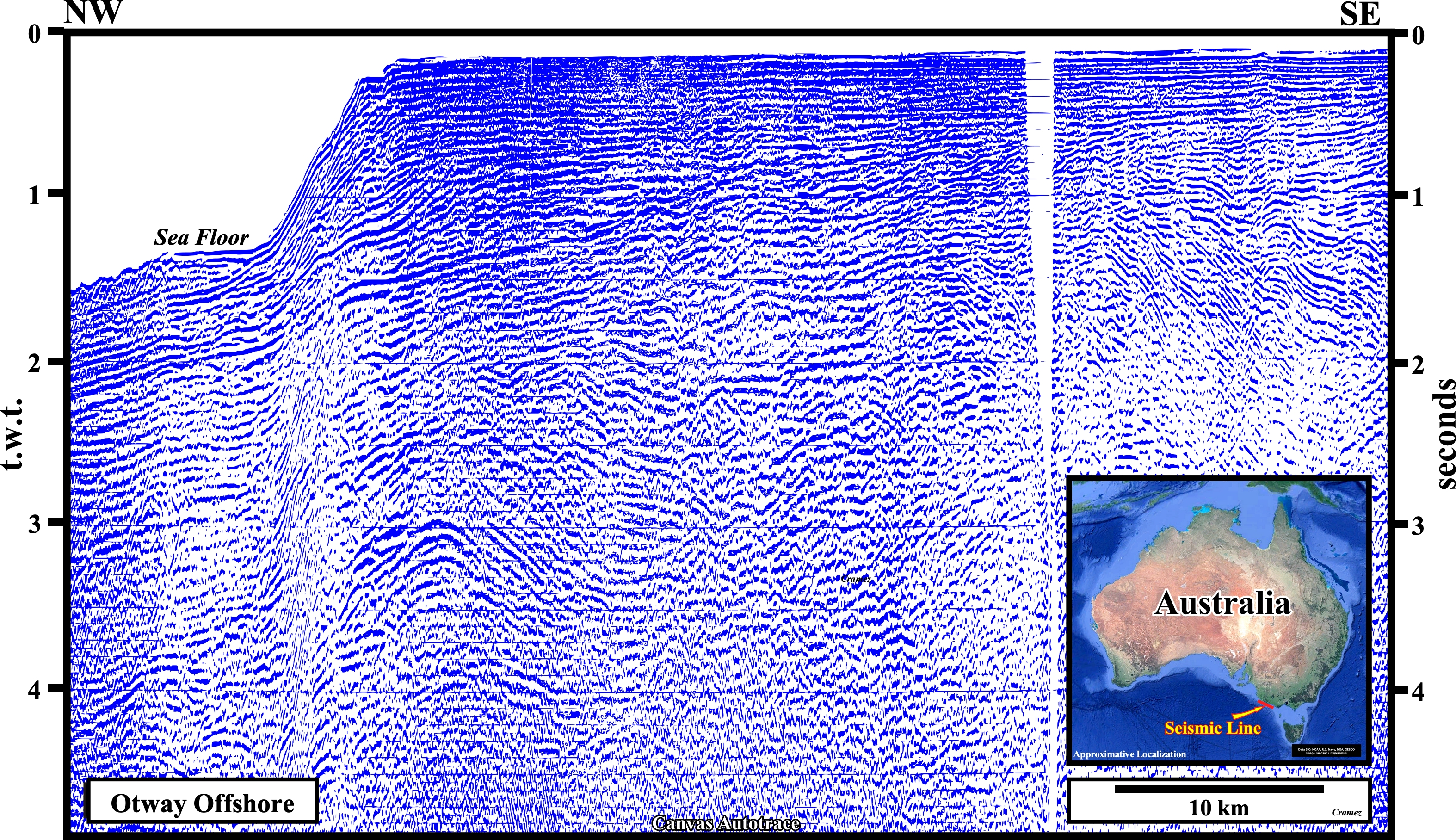
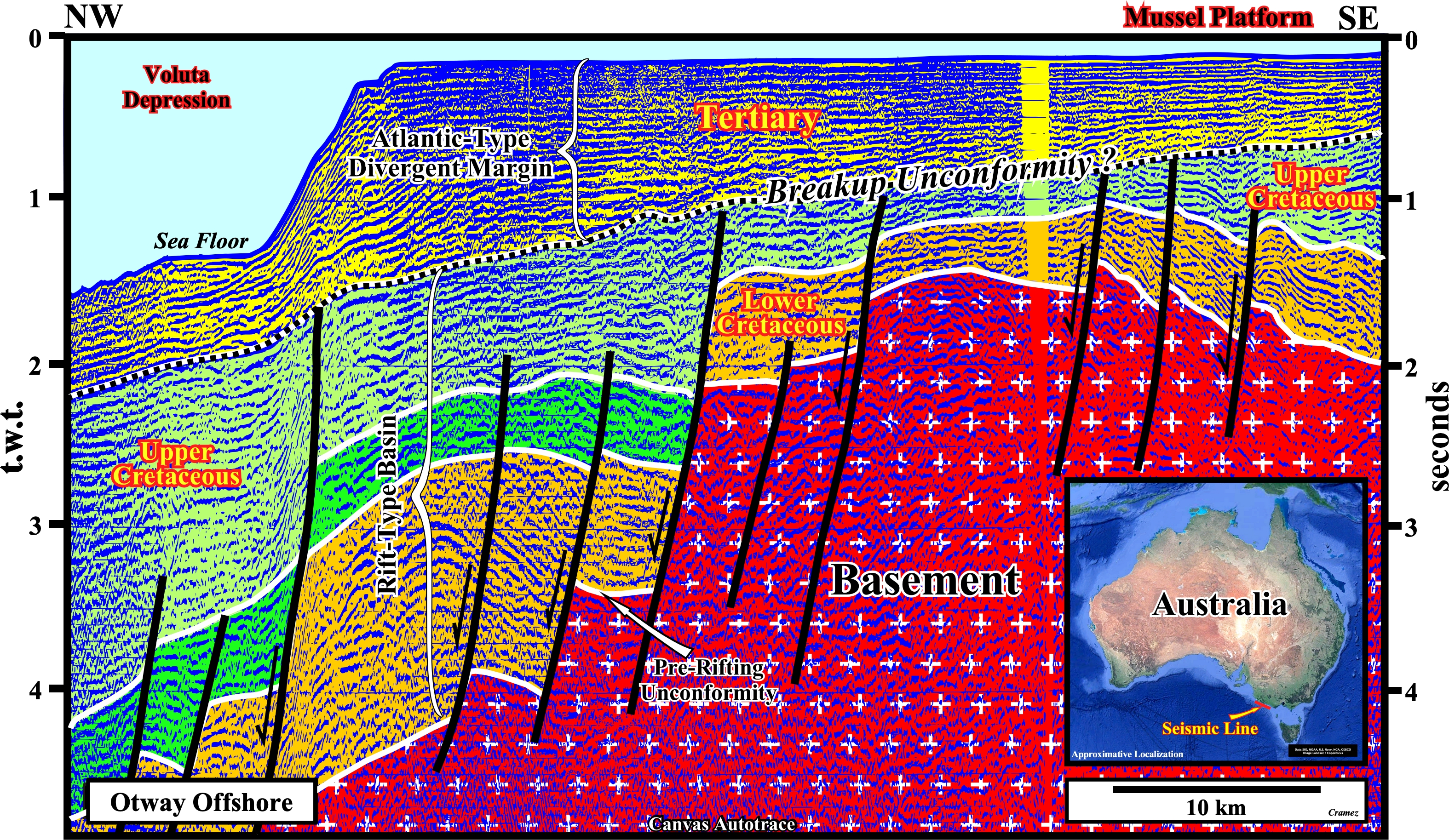
On this tentative geological interpretation of a Canvas autotrace of an old seismic shot, mainly, on the Mussel platform, several phases of rifting are recognized, principally, those occurring during the Cretaceous time. The seismic line is too short to put in evidence the onset of the major rifting phase, which seems to occurred the Late Jurassic (see previous tentative interpretation). The breakup of the extended Pangea continental crust, which comprises the basement, pre-rifting sediments and the rift-type basins sediments, seems to have occurred in the Late Maastrichtian. The post-rifting sediments of Atlantic-type divergent margin range, in age, between the latest Maastrichtian and the Holocene, since the Late Maastrichtian peneplain (breakup unconformity) was flooded by a major marine ingression at the end of the Maastrichtian.
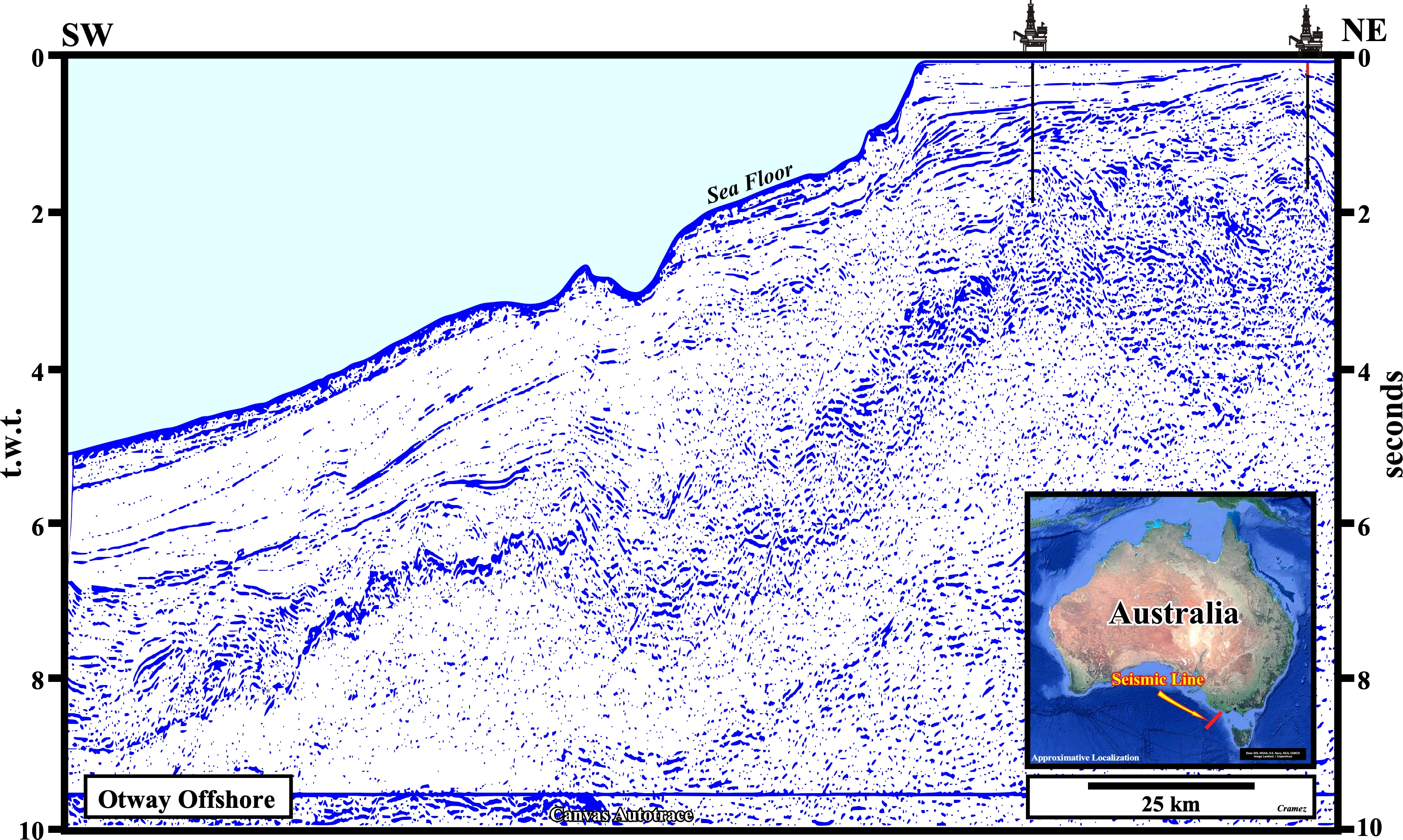
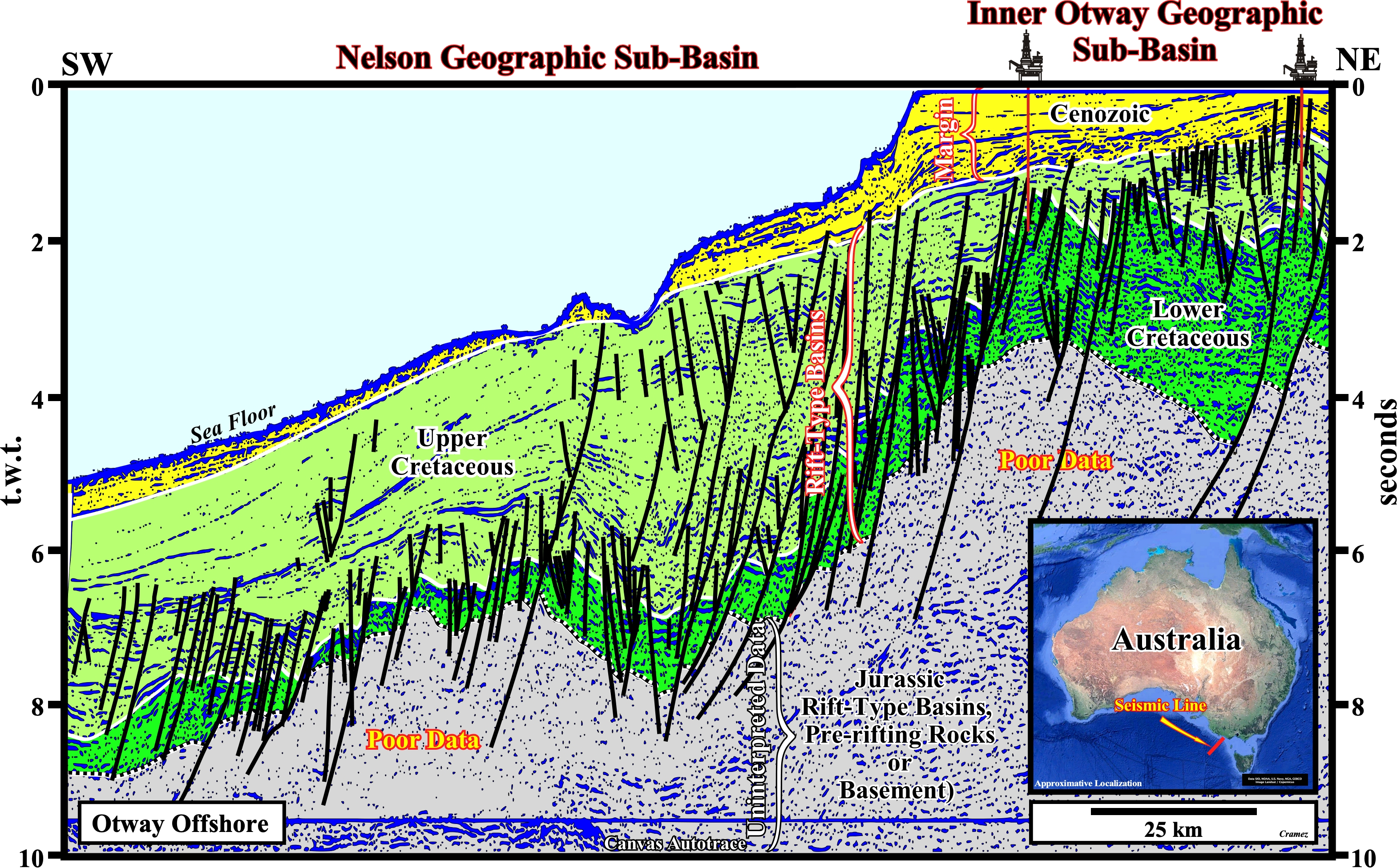
Below the Lower Cretaceous sediments, the seismic data is very poor to advance a tentative interpretation. The uninterpreted interval can, partially or locally, correspond to Jurassic rift-type basins, pre-rifting sediments or basement rocks. Above the poor data limit, the green intervals (Lower & Upper Cretaceous) highlight rift-type sediments, which predate the breakup of the Pangea lithosphere that includes the rift-type basins. In fact, the post-Pangea continental encroachment stratigraphic cycle, which is induced by the second 1st order eustatic cycle, starts with post-break marine ingression and not with the lengthening of the Pangea continental crust. The breakup unconformity (Late Maastrichtian) corresponds to the top of the light green interval over which the Atlantic-type divergent margin was deposited (latest Maastrichtian / Holocene).



Send E-mails to carlos.cramez@bluewin.ch with comments and suggestions to improve this atlas.
Copyright © 2001 CCramez
Last update:
2022