
West Iceland Offshore
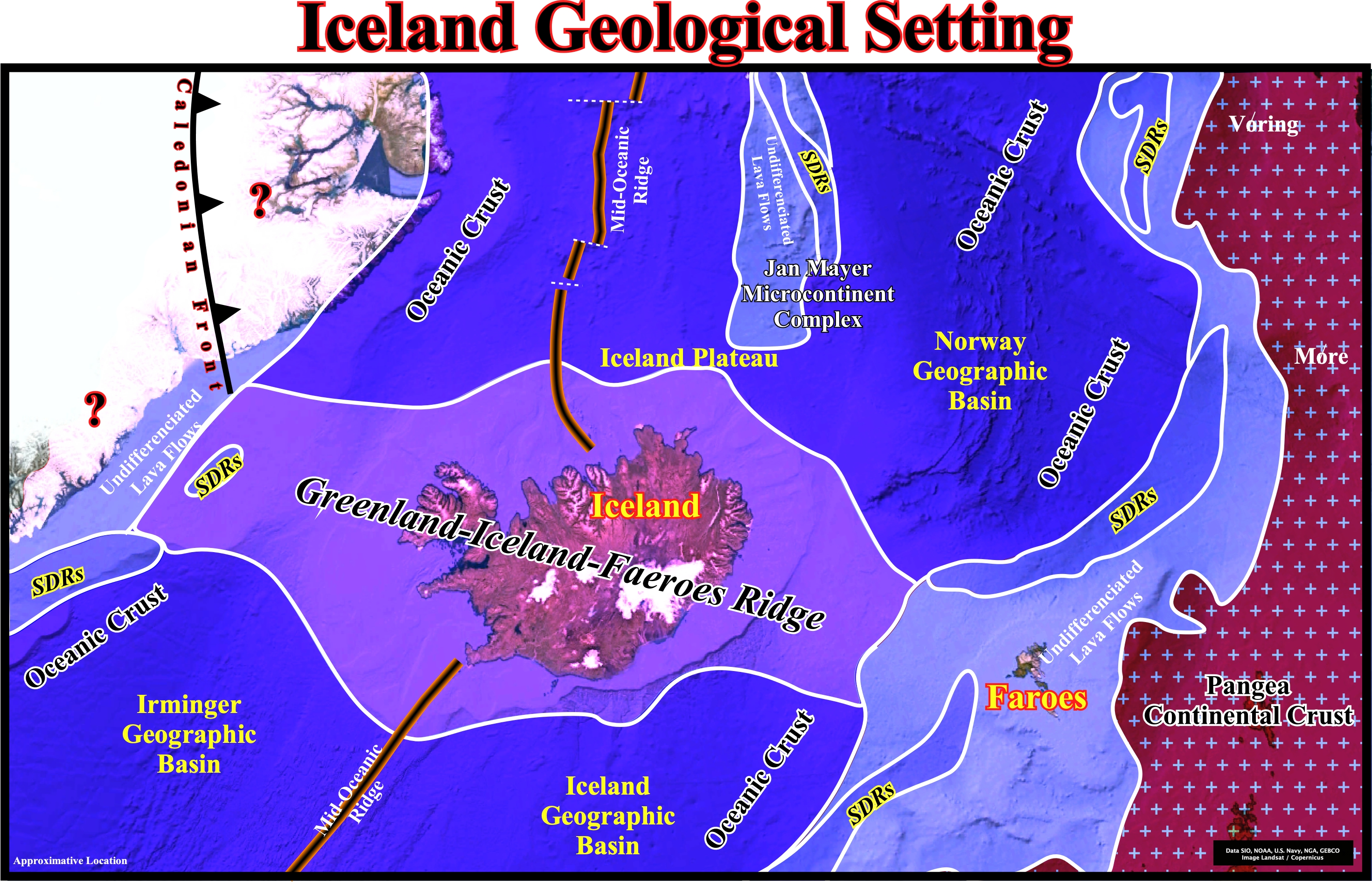
On the Iceland geological setting, in which the Atlantic-type divergent margin sediments are omitted, it is quite important to recognize the Greenland–Iceland–Faroe Ridge Complex, known, often by the acronym GIFRC. It seems to be present since the Paleocene time, i.e., after the westward shift of the breakup zone from the Rockall trough (see Page 12H) to the present Mid-Oceanic Ridge (Reykjanes ridge). Along the GIFRC, several abandoned rift-type valleys by lateral jumps of the valley-axis and seamounts have been recognized (A. Hjartarson et al., 2017). The different cumulative rift-valleys corroborate crustal accretion data through time. The seamount. particularly, southward of ridge complex, which seem to be younger than the surrounding ocean floor and the deformation of the oceanic crust (see next autotrace) suggest a still active intra-plate volcanic zone.
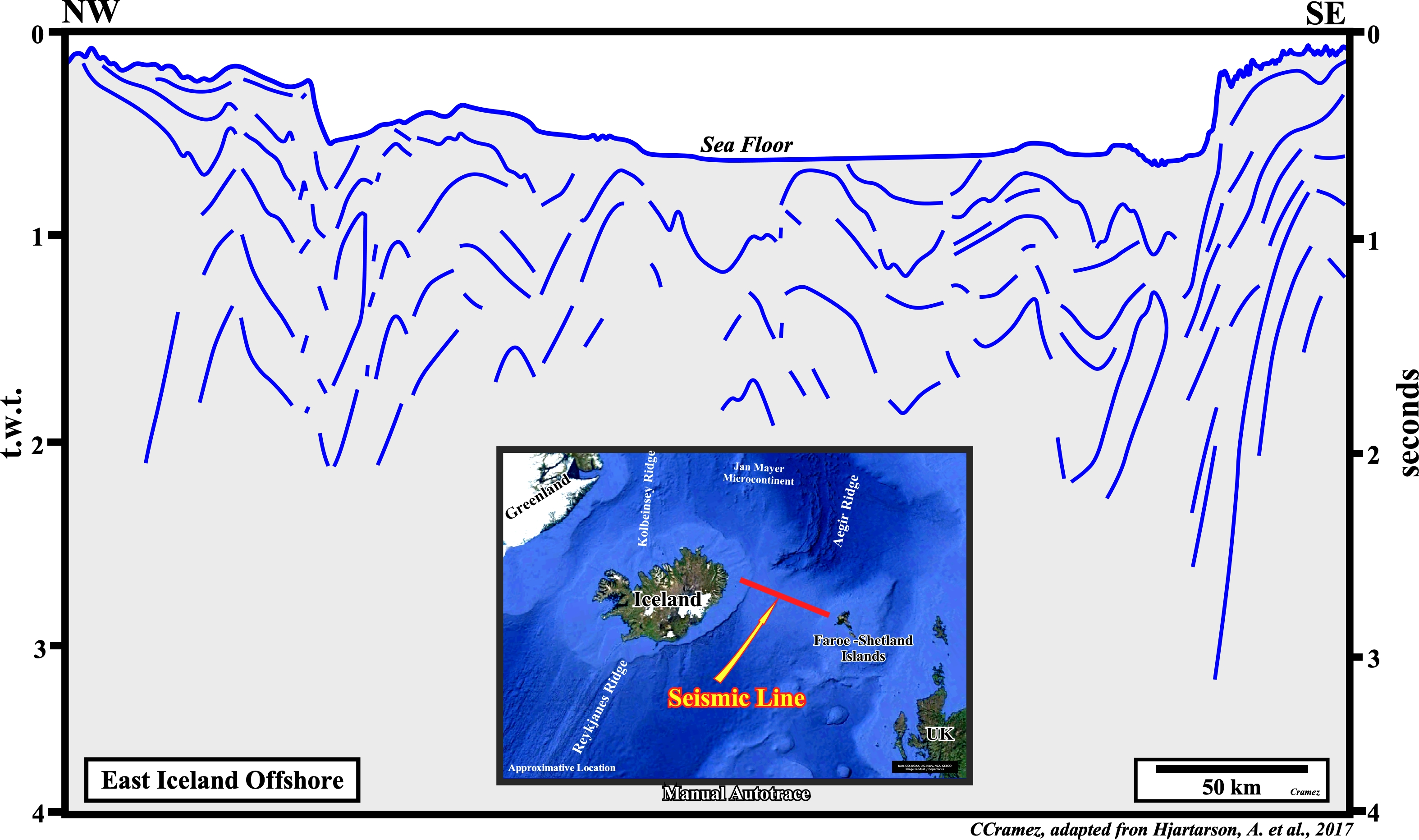

This manual autotrace of a seismic line shot along the Greenland-Iceland-Faroes Ridge Complex (GIFRC), between Iceland and Faroes, shows, in the eastern part, the conventional lengthened Pangea continental crust, in which Mesozoic rift-type basins developed, covered by a sub-aerial volcanic crust, i.e., by post-breakup lava-flows. In the central and western sectors of the autotrace, we find the oceanic crust covered by margin sediments. These sectors look quite deformed. In fact, assuming that the internal seismic reflectors are chronostratigraphic, their internal configuration suggests the oceanic crust is shortened and affected by a strike-slip faults system, which origin is, for us, difficult to understand. However, I'm sure that the geoscientists working or have worked in the area, know, probably how to explain such tectonic deformation.



Send E-mails to carlos.cramez@bluewin.ch with comments and suggestions to improve this atlas.
Copyright © 2001 CCramez
Last update:
2022