Indonesia Offshore
NW Sumatra Offshore
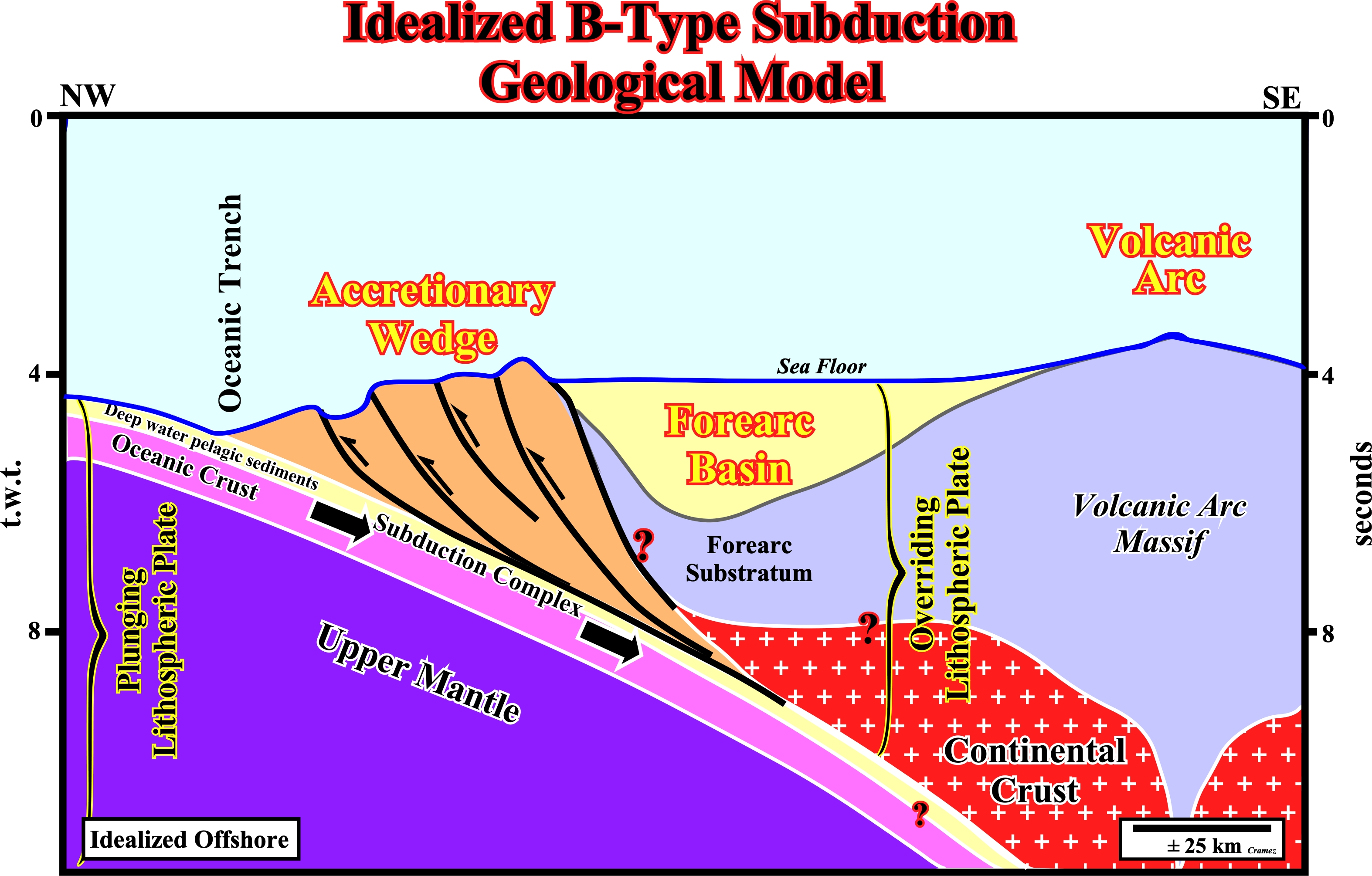
This idealized geological model for a B-Type subduction zone can be used as a basic knowledge for the tentative interpretations of the NW Sumatra offshore seismic lines or their autotraces. The subsiding or plunging lithospheric is, mainly, oceanic with a thin pelagic sedimentary cover, which dive under the a continental overriding plate, in which different geological body can be observed: (i) A continental crust, more or less, injected by the volcanic and clastic material melted in the deeper parts of the subduction zone, which forms a great part of the volcanic arc massif ; (ii) An accretionary wedge formed, mainly, by the sediments accreted onto the overriding lithospheric plate, i.e., by deep water marine sediments scraped off from the plunging slab of oceanic crust, which downward movement is induced by mantle convection currents (slab suction) and (iii) A forearc basin, which formation is dependent on sediment deposition, subsidence and on the direction and rate of convergence of the lithospheric plates.
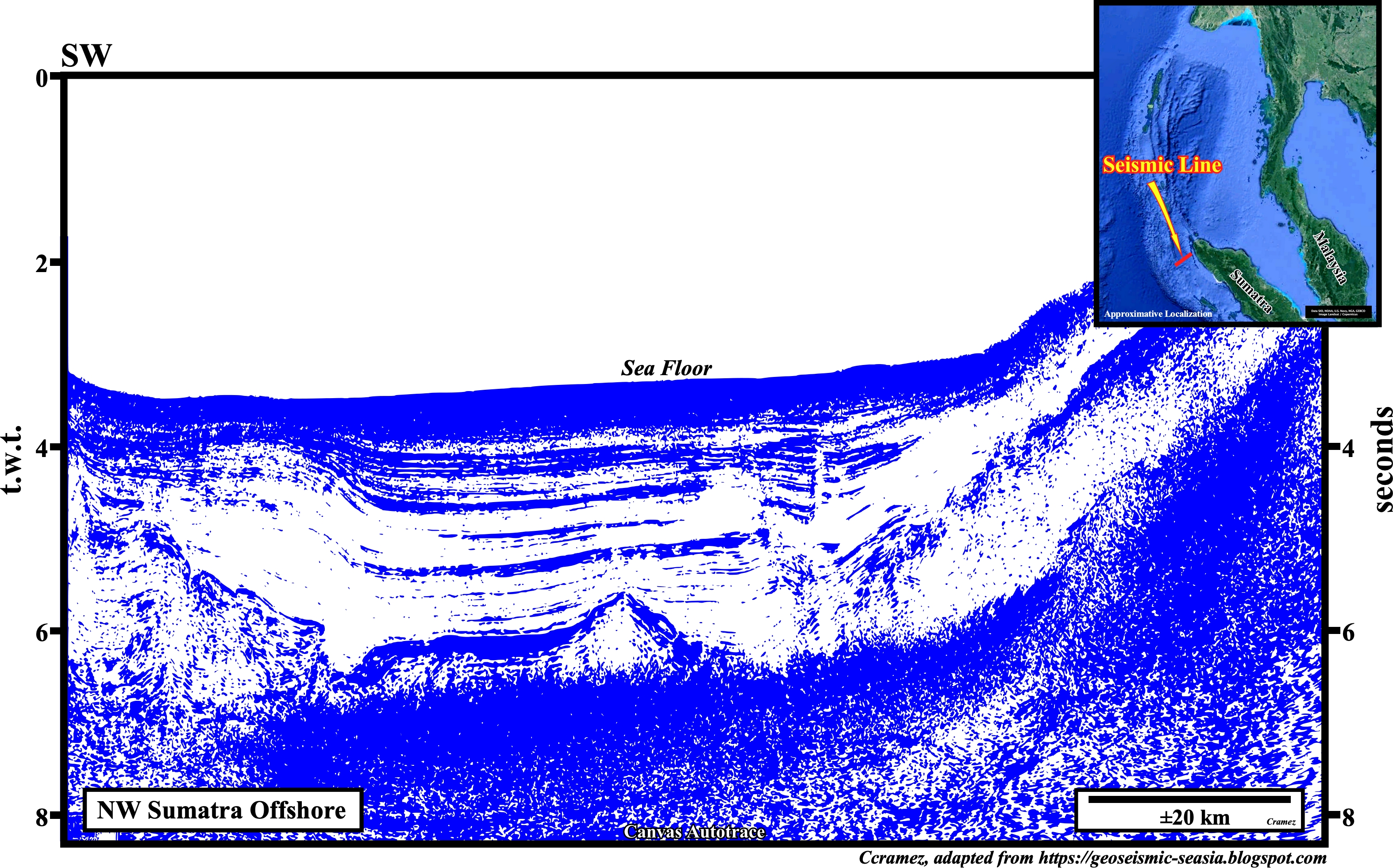
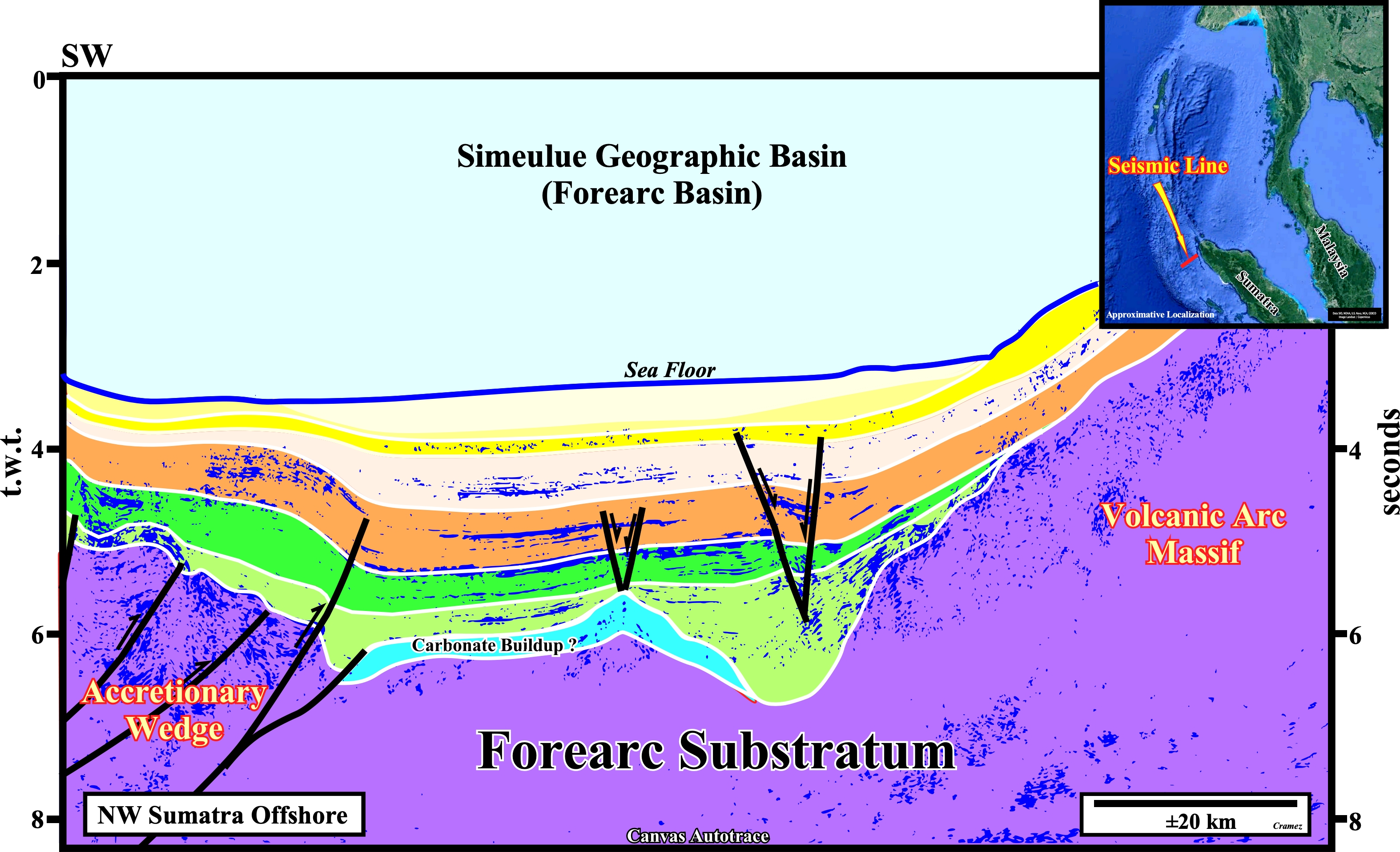
This autotrace illustrates the Simeulue geographic basin, which is bounded to the West by the Simeulue Island, and separated from the Nias geographic basin by the Banyak Islands. In geological terms and particularly in realms of subsidence, the Simeulue geographic basin, as well as the Nias geographic basin, corresponds to a forearc basin. Such a sedimentary basin, individualized from the North Sumatra geographic basin, by the Mid-Miocene wrench tectonics (uplift of the Barisan Fold Belt), formed, over the accretionary wedge and the volcanic arc massif, was filled by marine Miocene/Pliocene sediments. Potential carbonate reservoir-rocks seem likely (light blue interval), as well as bright spots seem present in the late Miocene/Pliocene sediments. The ongoing compression since the Plio-Pleistocene, which is responsible for the Sumatra coastal fold belt (Clure J., 2005), it is, also, at the origine of the sedimentary shortening observed in Simeulue forearc.


Send E-mails to carlos.cramez@bluewin.ch with comments and suggestions to improve this atlas.
Copyright © 2001 CCramez
Last update:
2022