
Brazil Offshore
Barreirinhas Geographic Basin
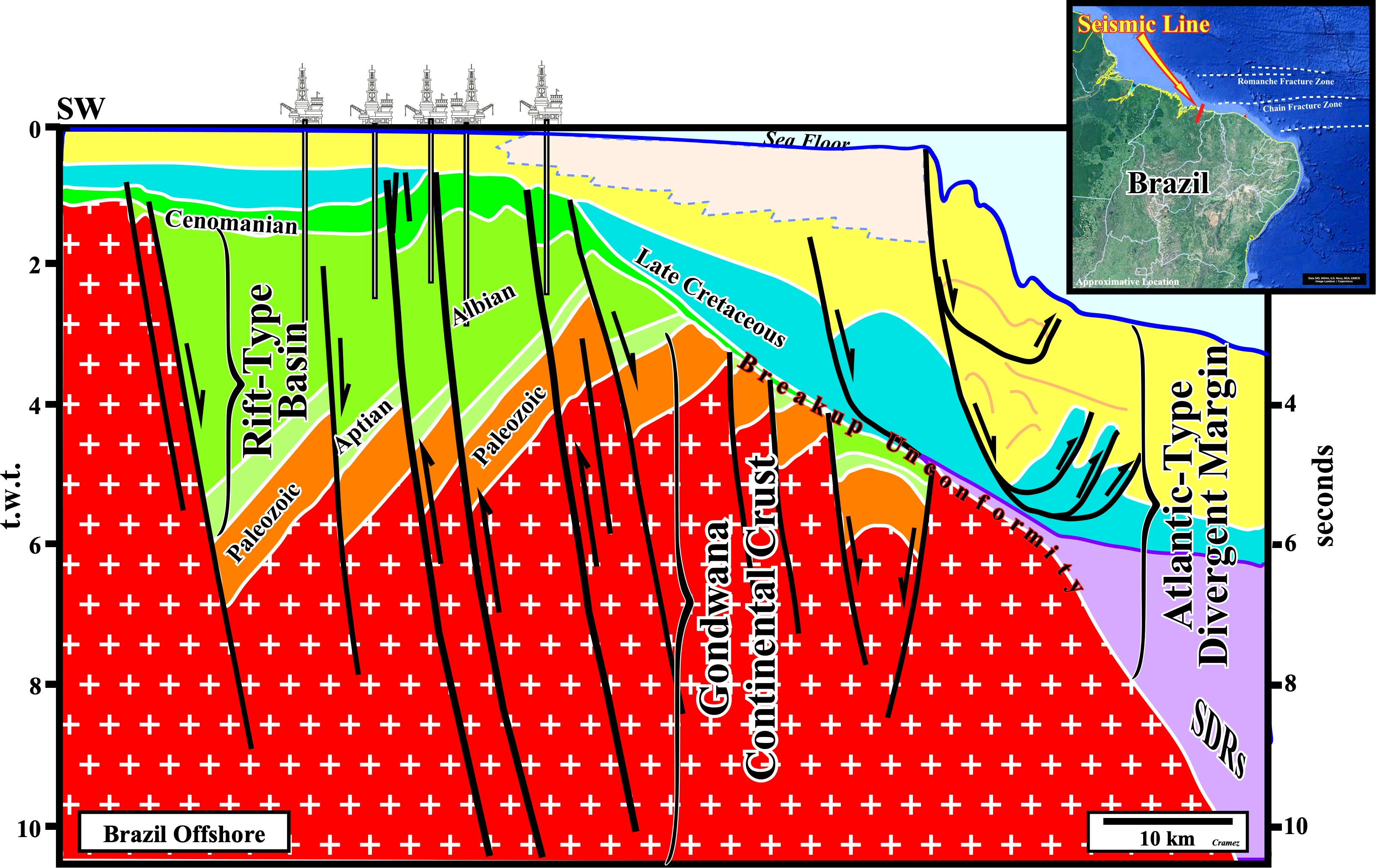
On this geological geological interpretation of a seismic line of Barreirinhas geographic basin, we can see a Lower Cretaceous rift-type basin developed within the Gondwana continental crust (Paleozoic sediments included) and an Atlantic-type divergent margin deposited, after the breakup wick is materialized by the breakup unconformity. Some of the faults created during the lengthening of the Gondwana continental crust, which allowed the formation and infilling of rift-type basins were, locally, reactivated as reverse, probably, in association with the activity of the fracture zones affecting the area (Chain Fracture zone). The Atlantic-type divergent margin started with the deposition of post-breakup lava-flows (volcanic sector of the margin), before the marine ingression, responsible for the Late Cretaceous sediments (clastic sector of the margin), which in the distal part of the basin near the the shelf break, are strongly affected by real listric faults (etymological sense), as illustrated on the next autotrace.
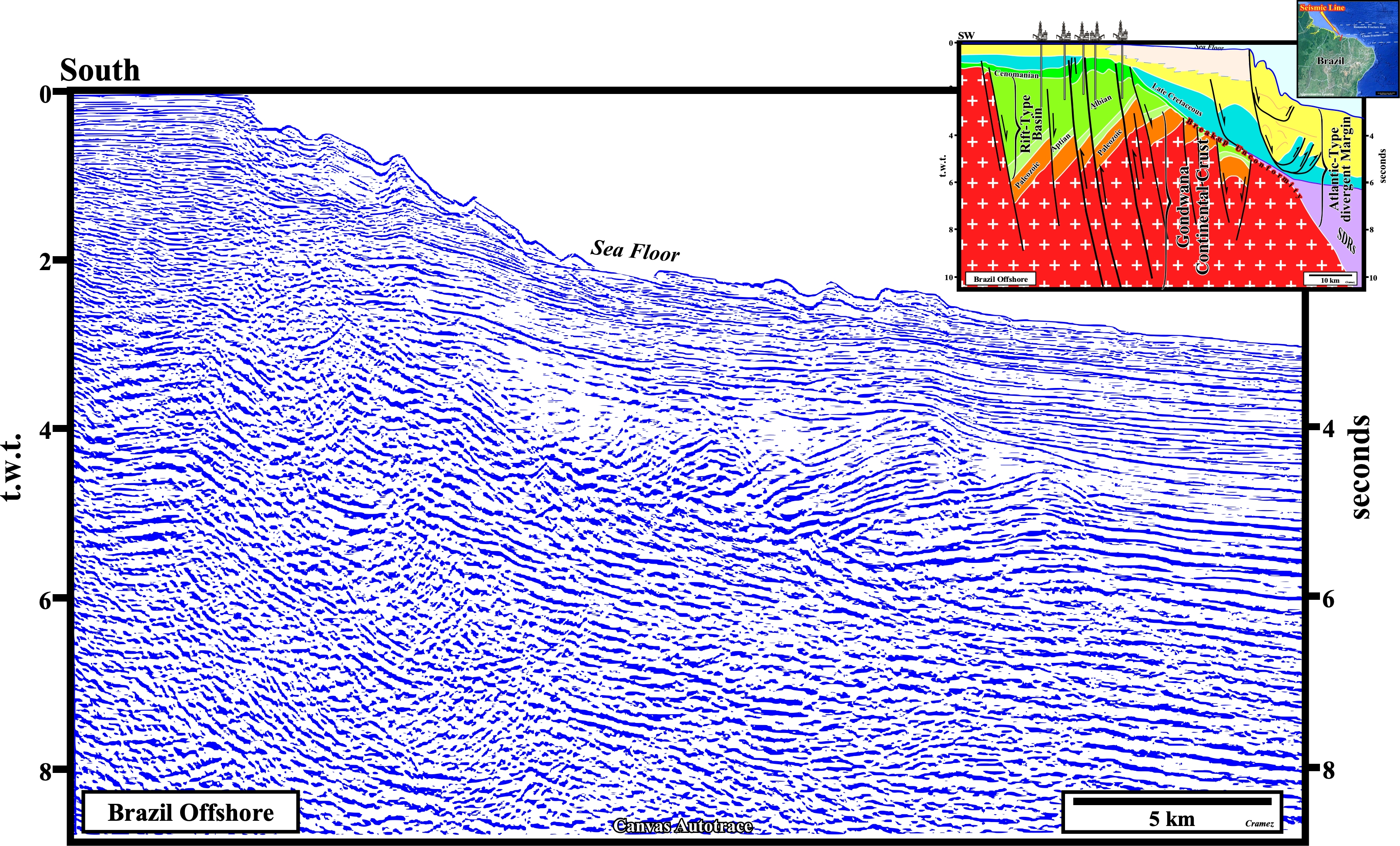
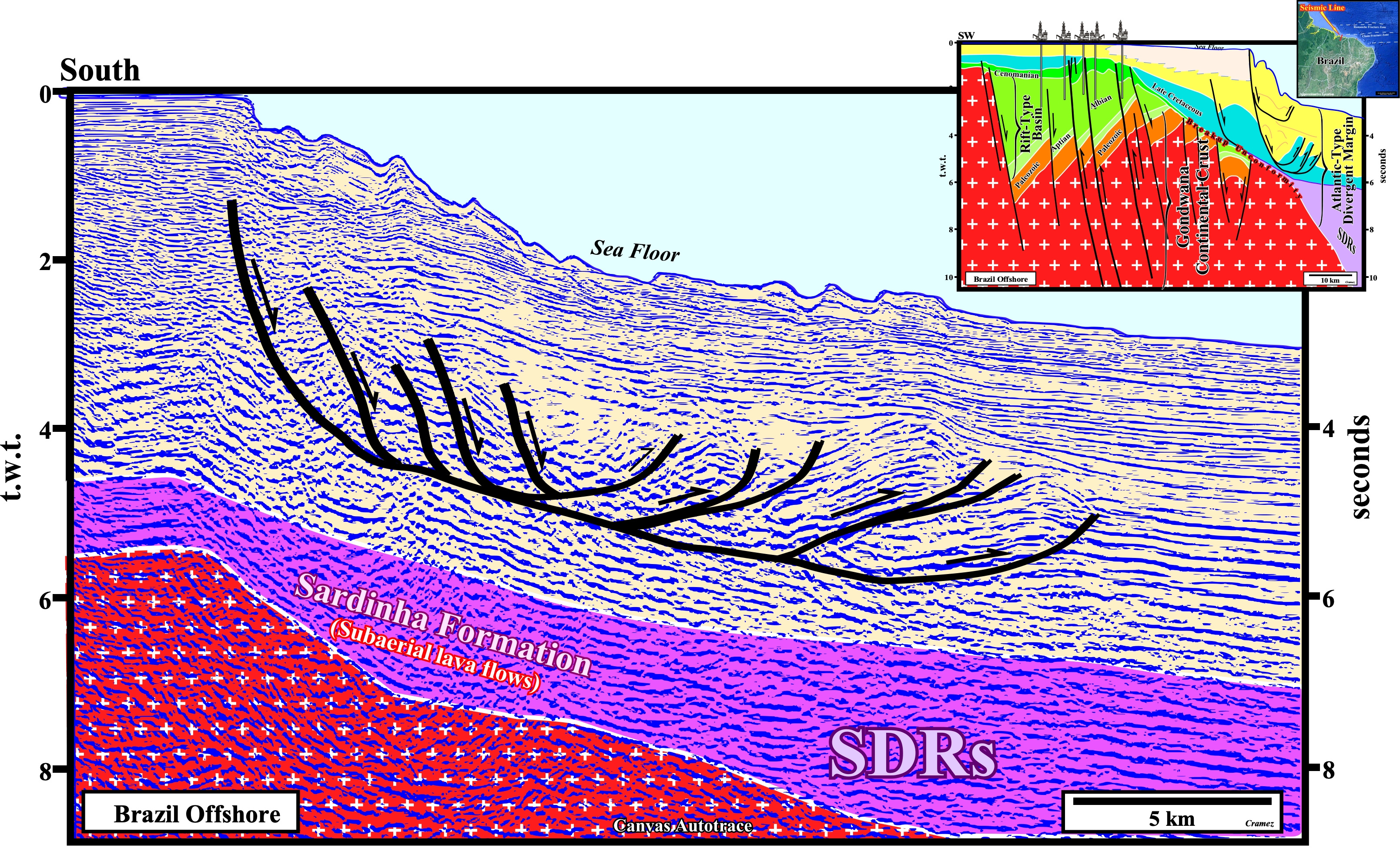
On this tentative geological interpretation of a Canvas autotrace of a N-S seismic line of the offshore of Barreirinhas geographic basins, the lower Atlantic-type divergent margin sediments above the sub-aerial lavas flows (Sardinha geological formation of the Brazilian geoscientists), are affected by listric faults, that is to say, by faults that have a relative movement similar that of a "spoon" (lystron in Greek) when you eat an ice-cream. In fact, along the curvilinear fault planes, particularly on the lower one, the up-dip relative fault movement is normal, while down-dip the relative fault movement is reverse or, said in other words, the up-dip extension (lengthening) is counterbalanced by a down-dip compression (shortening).
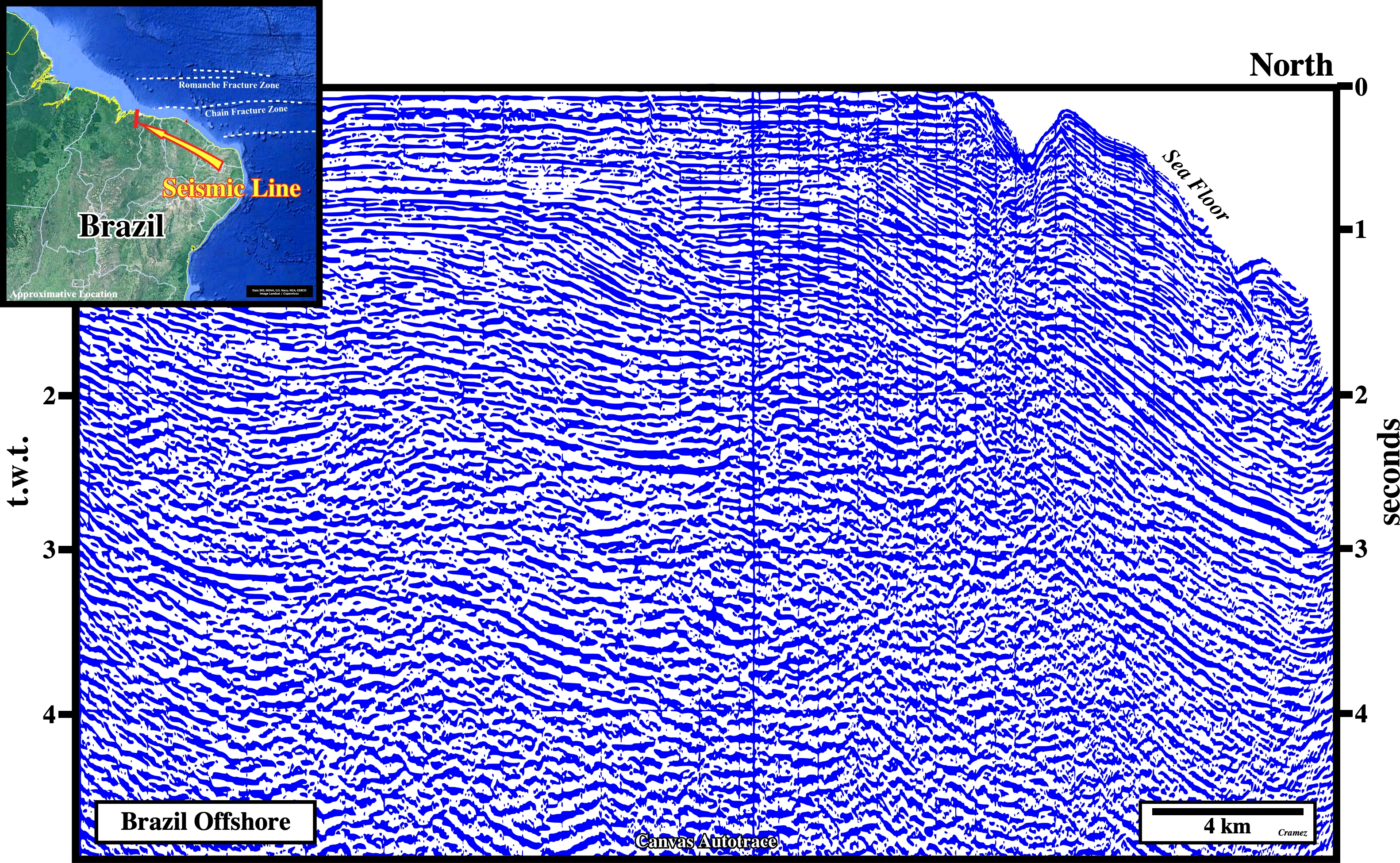
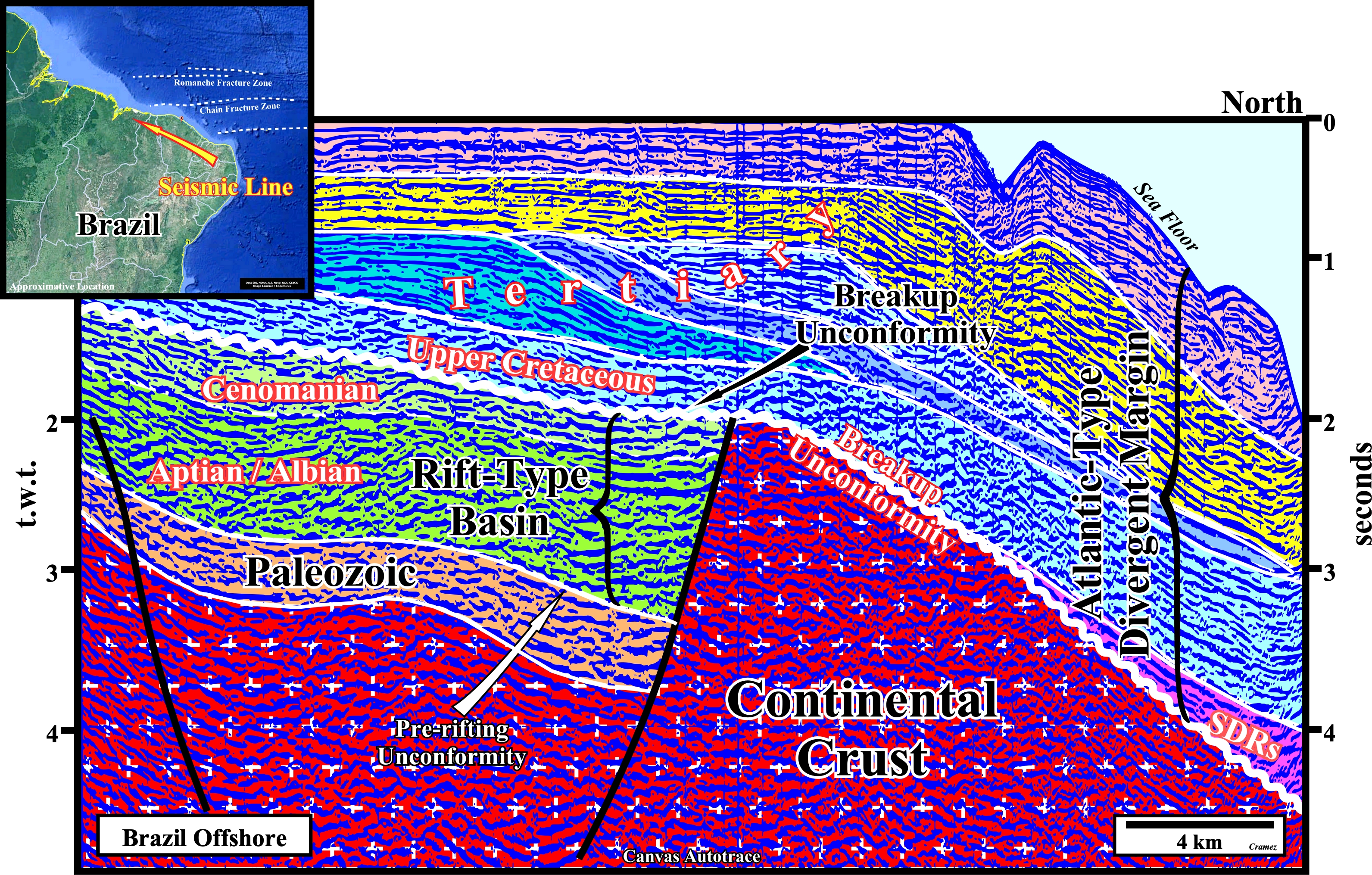
On this tentative interpretation of a Canvas autotrace of a seismic line shot, mainly, on the conventional offshore of the Barreirinhas geographic basin, the Lower Cretaceous rift-type basin, overlying a Paleozoic substratum (Gondwana continental crust) and the Atlantic-type divergent margin are. easily, recognized. Above the breakup unconformity, picked in white), in the distal part of the autotrace, SDRs cannot be excluded. The transgressive retrogradtional phase of the margin is quite thin, in contrast with the regressive phase, which exhibits its characteristic progradation geometry.



Send E-mails to carlos.cramez@bluewin.ch with comments and suggestions to improve this atlas.
Copyright © 2001 CCramez
Last update:
2022