
Brazil Offshore
Para-Maranhao Offshore
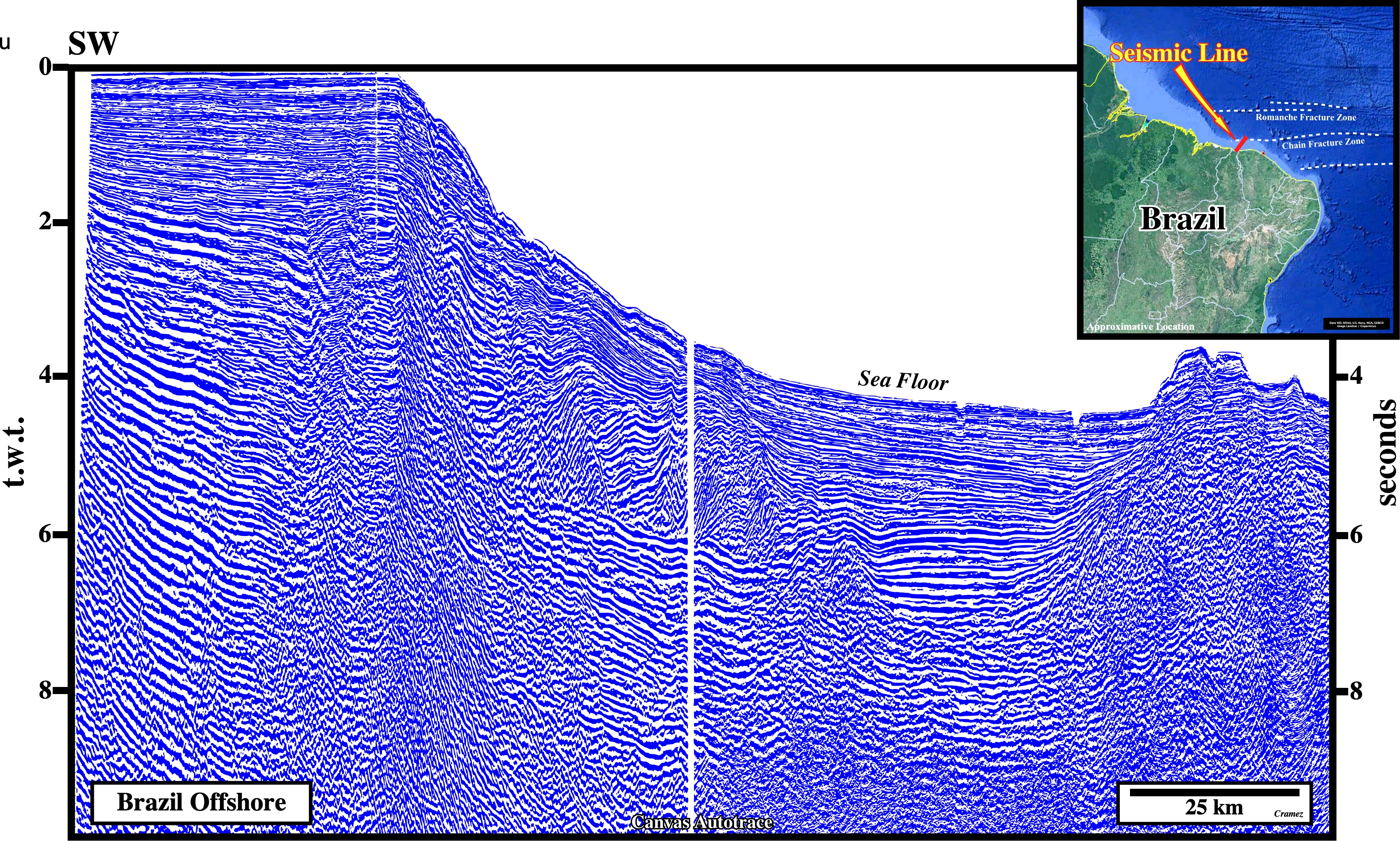
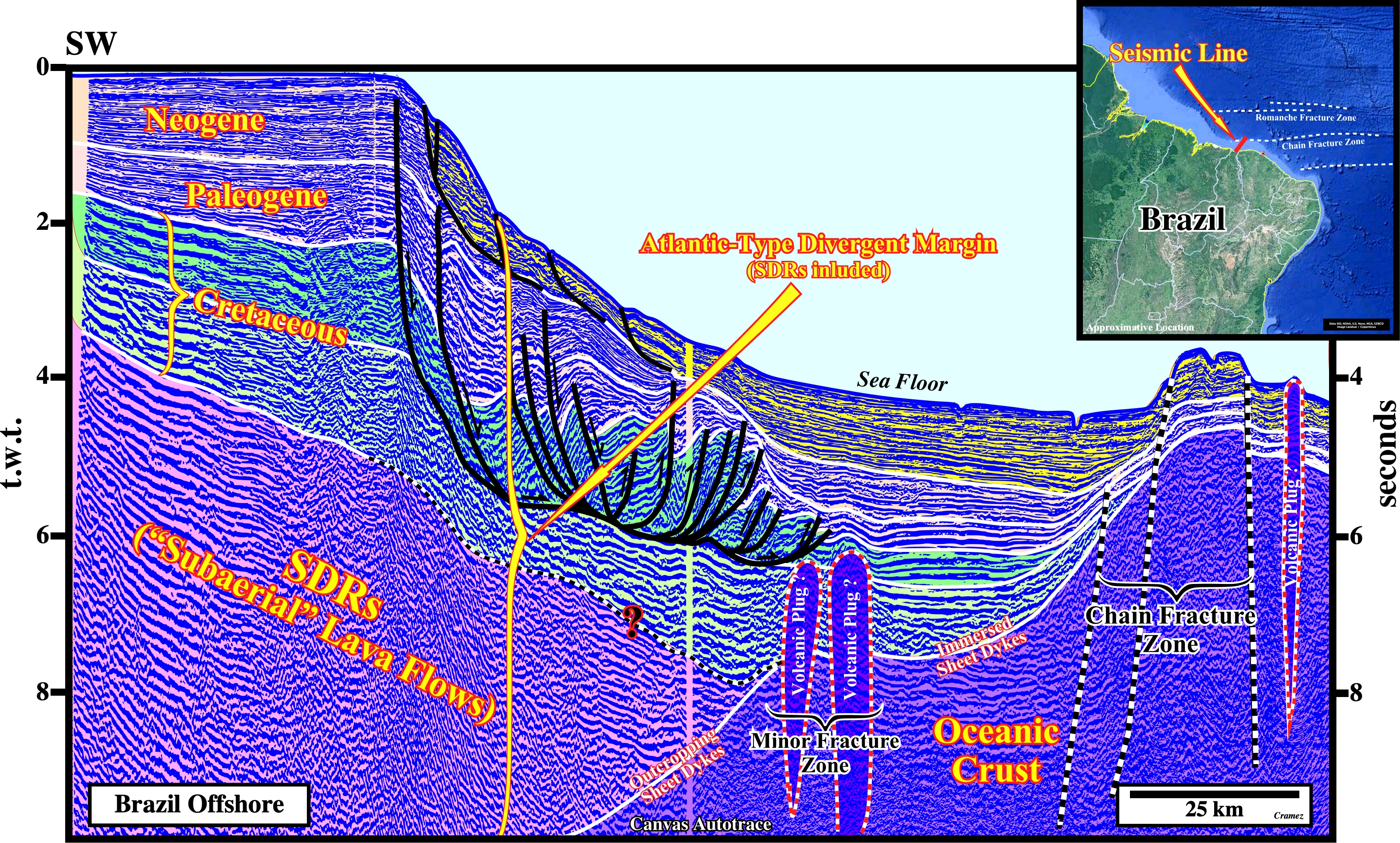
This tentative geological interpretation of a Canvas autotrace of seismic line, shot in western part of the Para-Maranhao geographic basin, is similar to those of the Amazonas Mouth geographic basin (see Page 12). In fact, taking into account that the seismic reflectors located seaward of the present shelf break are pull-down (seismic pitfall induced by the abrupt change in water-depth) is probable that the substratum of the sediments of the post-Pangea continental encroachment stratigraphic cycle is a volcanic crust. However, such a volcanic crust, in the western part of the autotrace corresponds to sub-aerial lava flows (sorry by the redundancy - lava cannot flow under seawater), while in the eastern part it corresponds to oceanic crust, i.e., mainly pillow lava and sheeted dykes in the upper levels. The small fold belt counterbalance the up-dip lengthening still is here well developed, but it seems to disappear eastward as illustrated on the next autotrace.
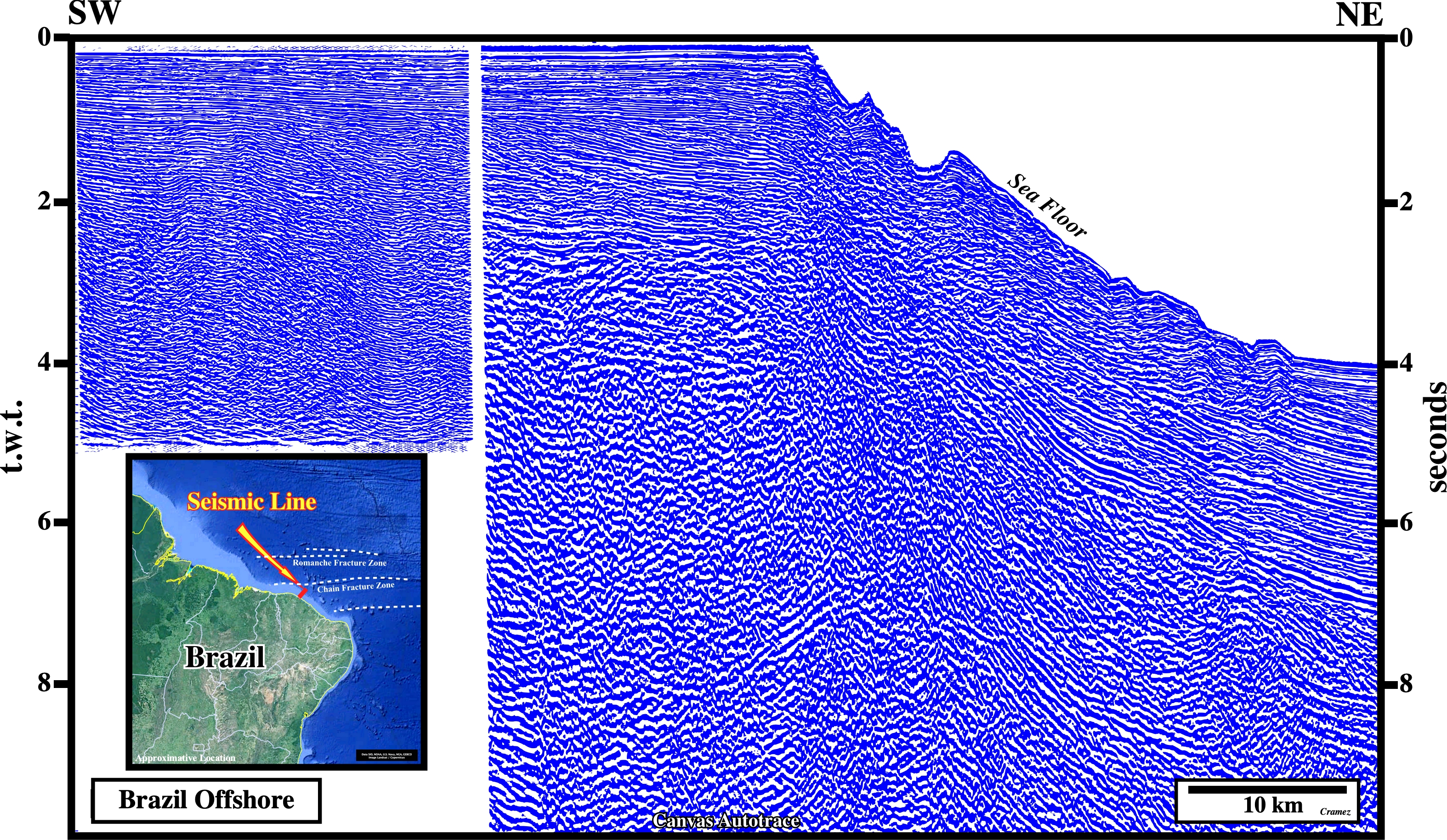
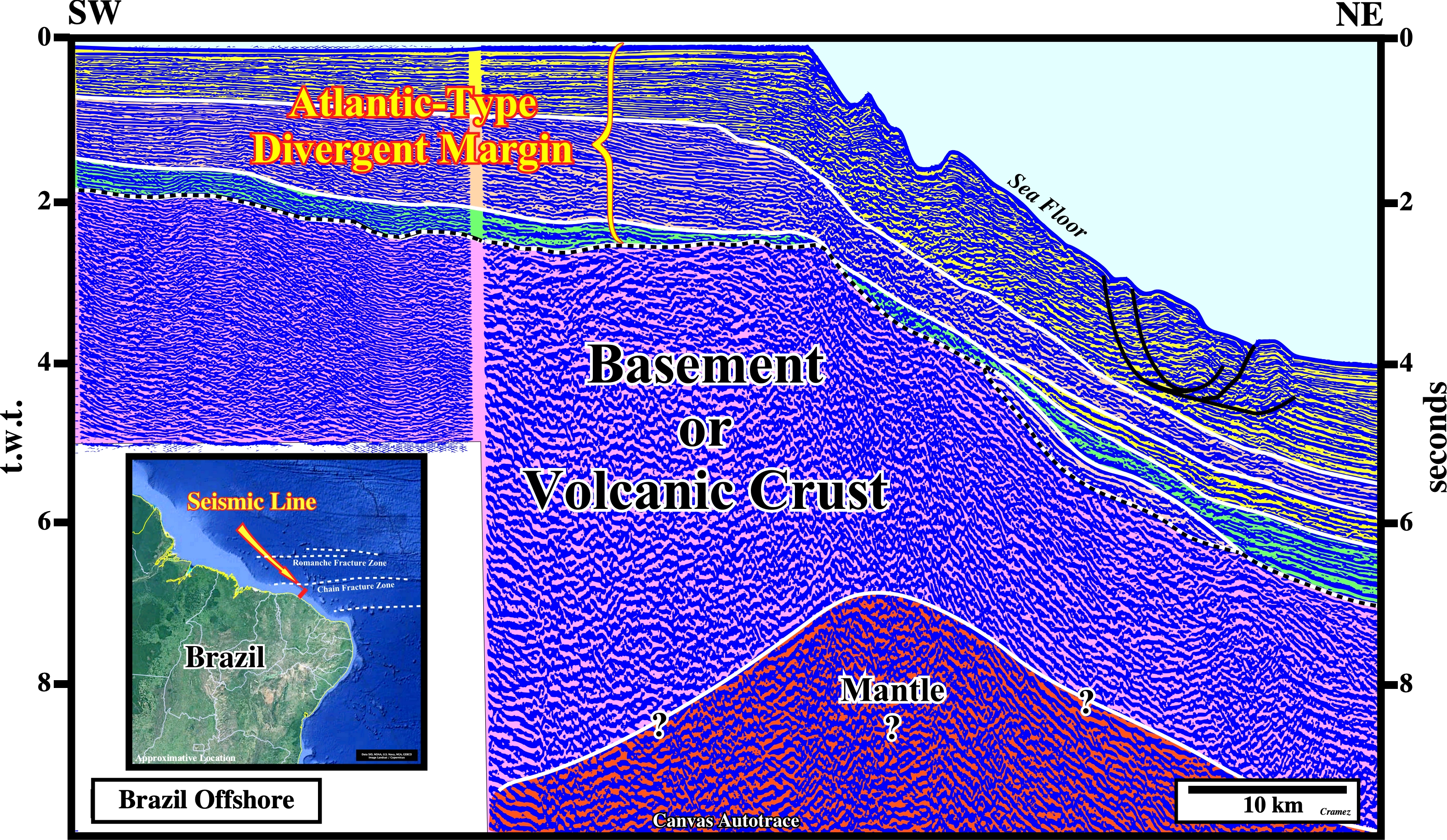
On this Canvas autotrace of an old composite seismic line of the eastern part of the Para-Maranhao geographic basin, the large fold belt, developed in association with an important listric fault, in which the up-dip extension (lengthening, i.e normal growth faults) is compensating by an downdip compression (shortening by folding and thrust faults), quite well visible on the previous autotrace, is here almost absent. The Atlantic-type diveregnet margin is well recognized. However its substratum is speculative. The seismic quality does not allow a scientific interpretation.



Send E-mails to carlos.cramez@bluewin.ch with comments and suggestions to improve this atlas.
Copyright © 2001 CCramez
Last update:
2022